
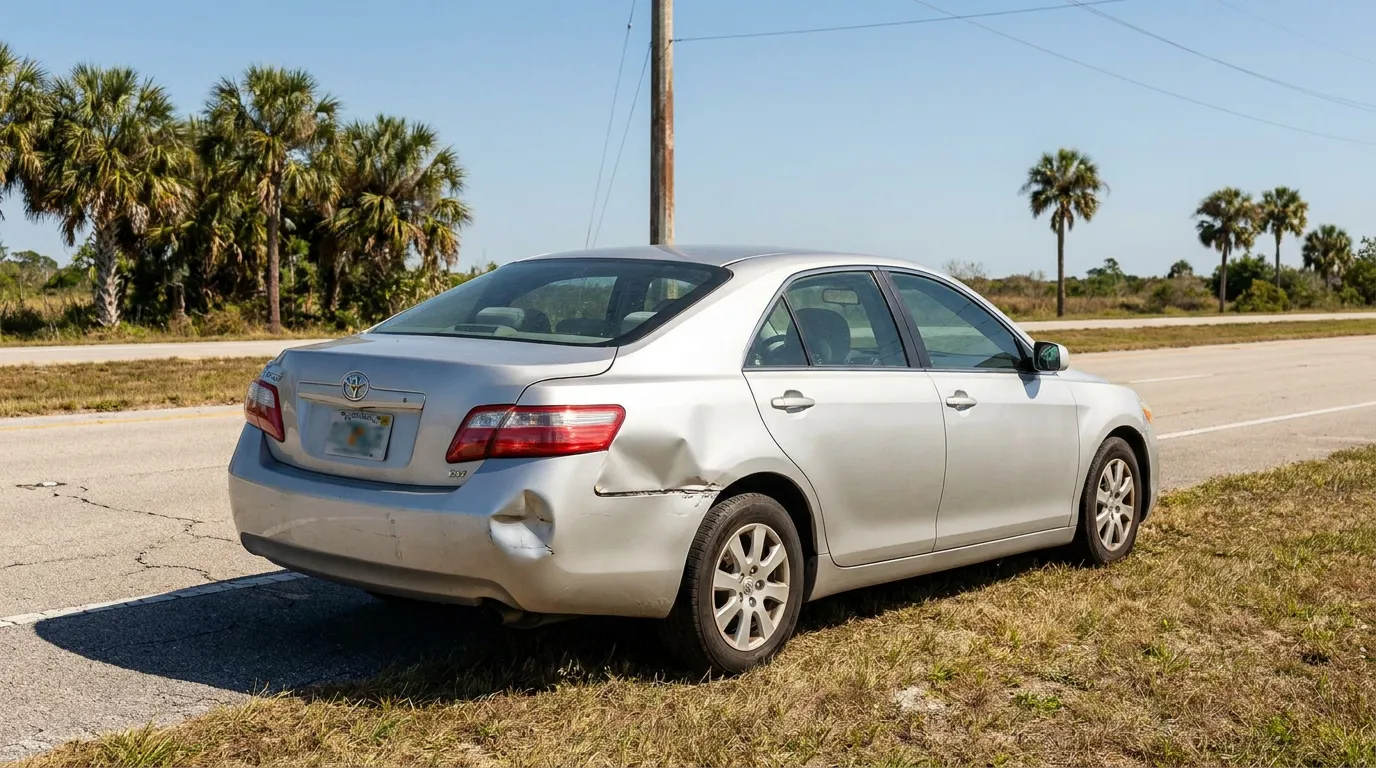
Understanding Your Rights After a Crash With an Uninsured Driver in The Villages
Key Takeaways: Yes, a Villages crash victim can sue an uninsured driver in Florida, but recovery depends on several legal factors. Florida’s no-fault system requires your PIP coverage to respond first, while uninsured motorist (UM) coverage often becomes the most important recovery source when the at-fault driver lacks liability insurance. Non-economic damages through a UM claim require meeting a serious-injury threshold. While you can sue the uninsured driver directly, collecting on that judgment is often difficult without assets. Florida’s modified comparative negligence rule can reduce or bar recovery if you are found more than 50 percent at fault. Most negligence and wrongful death claims are now subject to a two-year filing window under Fla. Stat. § 95.11.
Yes, a Villages crash victim can generally sue an uninsured driver in Florida, but the path to compensation involves several legal layers. Florida’s no-fault system, uninsured motorist (UM) coverage rules, comparative fault, and strict filing deadlines all shape what you can recover. Understanding these elements early can protect your ability to pursue fair recovery after a serious collision on US-441 or CR-466.
If you are asking what happens if someone without insurance hits you in Florida, Glover Law Firm is ready to help. You can reach our team by calling 352-205-4495, learn more at Glover Law Firm, or request a review through our online contact page.
How Florida’s No-Fault System Shapes Your First Steps
Florida is a no-fault state, which means your own insurance responds first regardless of who caused the crash. Under Fla. Stat. § 627.736(1), a complying policy must provide personal injury protection (PIP) benefits to the named insured and relatives residing in the same household. These benefits generally cover a portion of your medical costs and lost wages.
This framework limits what you can later seek from another driver. The statute provides that an injured party bringing suit has no right to recover damages for which PIP benefits are paid or payable. A Florida no-fault accident channels first-dollar losses through your own coverage before a lawsuit begins.
💡 Pro Tip: Report your crash to your own insurer promptly and keep every medical record and mileage log. Documentation becomes the backbone of both a PIP claim and any later lawsuit.
What Happens if Someone Without Insurance Hits You in Florida
When an at-fault driver has no liability coverage, your uninsured motorist coverage often becomes your most important recovery source. A Florida Law Review analysis by Josias N. Dewey examined the reach of this coverage, underscoring how central UM protection is to whether a Villages crash victim can recover when the other driver is uninsured. UM coverage effectively steps into the shoes of the missing liability policy.
UM benefits carry important limits. Under Fla. Stat. § 627.727(7), a UM insurer is not liable for damages in tort for pain, suffering, mental anguish, and inconvenience unless the injury meets the serious-injury threshold described in s. 627.737(2). That threshold generally includes permanent injury, significant and permanent scarring or disfigurement, or death. This means a victim must typically show a qualifying injury before recovering non-economic damages through a uninsured motorist claim in Florida.
Filing this type of claim involves its own procedures and potential disputes. Our guide on how to file a uninsured motorist claim Florida walks through common steps and pitfalls. Because insurers may dispute the value or severity of your injuries, careful preparation makes a meaningful difference.
Suing the Uninsured Driver Directly
Beyond a UM claim, you may also sue the uninsured driver personally for negligence. A lawsuit lets you pursue economic and non-economic damages that exceed your available coverage. The challenge is practical: many uninsured drivers lack assets to satisfy a judgment, which is why UM coverage frequently matters more.
Collectibility is a real consideration. Even a strong liability case may yield little if the defendant cannot pay. Pursuing both a UM claim and a direct suit, where appropriate, can maximize your realistic path to auto accident compensation in Florida.
💡 Pro Tip: Before assuming an at-fault driver is truly uninsured, confirm whether any other policy might apply, such as an employer’s coverage or a household relative’s policy. Coverage can sometimes exist where it is not obvious.
How Comparative Fault Affects Your Recovery
Florida applies a modified comparative negligence system that can reduce or eliminate your recovery. Under Fla. Stat. § 768.81(6), any party found to be greater than 50 percent at fault for his or her own harm may not recover damages. This makes establishing the other driver’s negligence critical.
Fault can also be spread among multiple parties. Section 768.81(3)(a) provides that a defendant must affirmatively plead the fault of a nonparty and prove it by a preponderance of the evidence. A Florida Bar Journal discussion on refining comparative fault explains how apportionment theories have developed.
Each defendant’s liability is generally limited to that party’s proportional share. Section 768.81 directs courts to enter judgment against each party based on that party’s percentage of fault. This proportional structure matters in multi-vehicle crashes, especially when one at-fault driver is uninsured or insolvent.
Deadlines That Can Make or Break Your Claim
Florida law sets firm time limits for filing a lawsuit, and missing them can bar your claim entirely. Fla. Stat. § 95.11 governs limitations for actions other than recovery of real property. Following the 2023 HB 837 tort reform, § 95.11(5)(a) reduced the deadline for most negligence claims from four years to two years for causes of action accruing on or after March 24, 2023.
Both personal injury and wrongful death claims arising from a crash generally fall under this two-year window. You can review the current deadlines in Florida’s limitations statute, which lists negligence and wrongful death among actions that must be brought within two years.
A narrow discovery exception exists for certain claims, but it does not apply to ordinary crash claims. For general negligence claims such as auto accidents, no extended discovery cap or statute of repose applies. The statute of limitations was reduced from four years to two years under HB 837 for claims accruing on or after March 24, 2023. Courts construe any such exceptions narrowly, so do not assume one will preserve a late claim.
💡 Pro Tip: Treat the two-year deadline as your working timeline, not a safety net. Investigations, medical documentation, and coverage disputes take time, and early action leaves room to build a stronger uninsured driver crash claim in The Villages, FL.
Special Situations: Rideshare and Golf-Cart Crashes
Rideshare collisions add complexity. Under Fla. Stat. § 627.748(8), an insurer may exclude coverage, including uninsured and underinsured motorist coverage, personal injury protection, and liability coverage, while a transportation network company driver is logged on to the digital network or providing a prearranged ride. Which policy applies can hinge on the driver’s app status at the moment of the crash.
Coverage minimums also shape available protection. Florida’s structure caps certain requirements, and insurers may not require property damage liability greater than $10,000 to be purchased with PIP under s. 627.7275. You can explore the broader insurance framework in the state’s compiled statutes covering Florida motor vehicle insurance.
Here is a simplified comparison of the two most common recovery routes:
| Recovery Path | Primary Source | Key Limitation |
|---|---|---|
| UM Claim | Your own UM coverage | Non-economic damages require a serious-injury threshold under § 627.727(7) |
| Direct Lawsuit | The at-fault driver personally | Collectibility often limited if the driver lacks assets |
Building a Stronger Case After an Uninsured Driver Crash
Practical preparation often determines how smoothly a claim proceeds. Because insurers may minimize serious injuries, thorough documentation supports both UM and direct claims. Working with a knowledgeable The Villages car accident attorney can help you organize evidence and respond to disputes.
Consider these essential steps:
- Seek prompt medical evaluation and follow all treatment recommendations
- Preserve photos, witness contacts, and the crash report
- Notify your own insurer and confirm your UM coverage limits
- Track lost wages, out-of-pocket costs, and how injuries affect daily life
Guidance tailored to your facts matters because outcomes depend on specific circumstances. Our page for a The Villages auto accident lawyer offers additional background. Every case turns on its own evidence, so this article is educational and not individualized legal advice.
Frequently Asked Questions
1. Can I still recover money if the driver who hit me has no insurance?
Often, yes, primarily through your own uninsured motorist coverage. UM coverage can respond where the at-fault driver has no liability policy, subject to the serious-injury threshold in Fla. Stat. § 627.727(7) for non-economic damages. You may also sue the driver directly, though collecting can be difficult.
2. How long do I have to sue after being hit by an uninsured driver in Florida?
Generally two years for negligence and wrongful death claims accruing on or after March 24, 2023. Fla. Stat. § 95.11(5) sets this deadline, and missing it can bar your claim. A limited discovery exception may apply in narrow circumstances.
3. Does PIP cover me even if the other driver is uninsured?
Yes, PIP applies regardless of fault under Fla. Stat. § 627.736(1). It generally covers a portion of your medical bills and lost wages first. Amounts paid through PIP typically cannot be recovered again in a later lawsuit.
4. What if the crash was partly my fault?
You may still recover, but your damages can be reduced or barred. Under Fla. Stat. § 768.81(6), a party found greater than 50 percent at fault cannot recover damages. Fault below that threshold reduces recovery proportionally.
5. Are rideshare crashes handled differently?
They can be, depending on the driver’s app status. Fla. Stat. § 627.748(8) allows insurers to exclude certain coverages while a rideshare driver is logged on or providing a prearranged ride. Which policy applies often depends on when the crash occurred.
Moving Forward After Your Villages Crash
Recovering after a crash with an uninsured driver in Florida usually means combining several protections. Your PIP benefits respond first, UM coverage often provides the core recovery, and a direct lawsuit may supplement it when the facts and deadlines allow. Comparative fault rules and the two-year filing window under Fla. Stat. § 95.11 make timely, well-documented action essential.
When you are ready to discuss what happens if someone without insurance hits you in Florida, the team at Glover Law Firm is here to explain your options. Call us today at 352-205-4495 or reach out through our confidential contact form to take the next step toward the auto accident compensation you may be owed.