
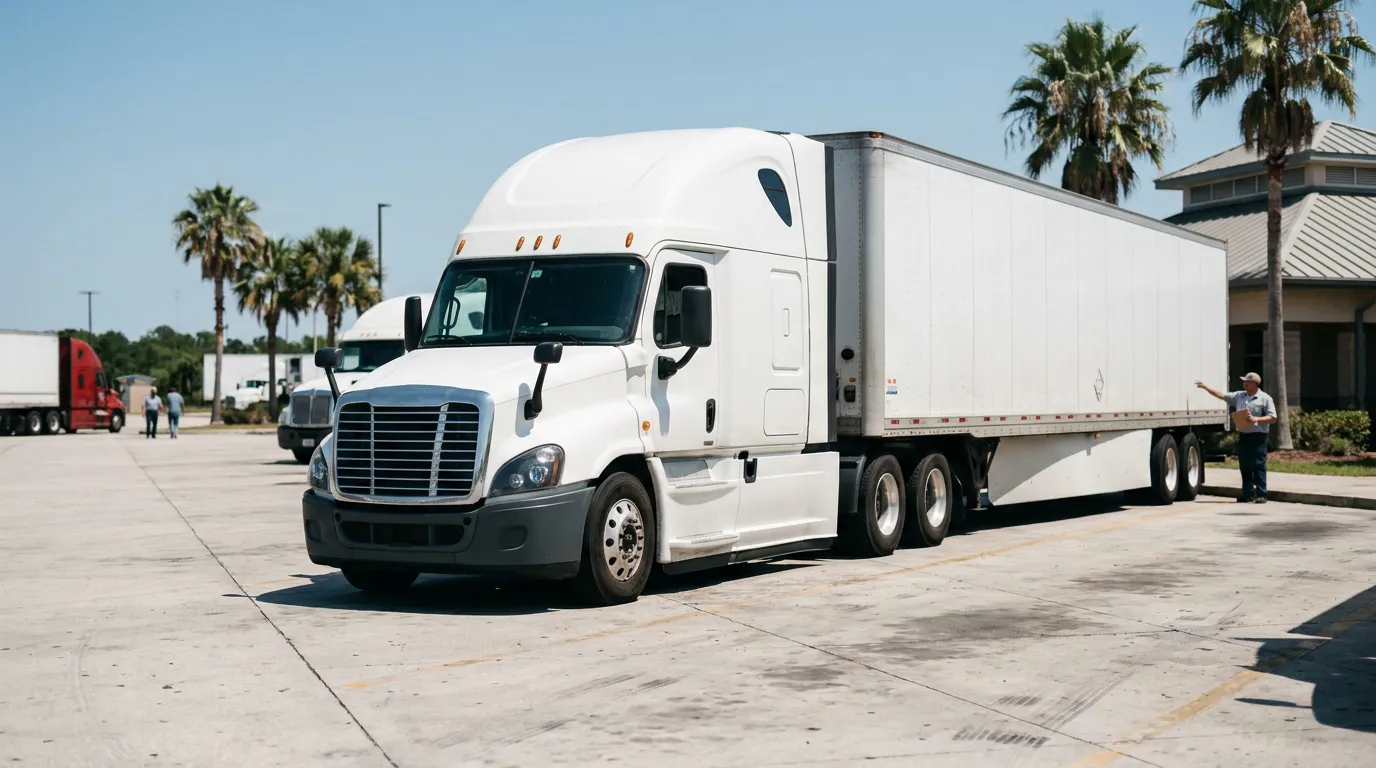
How A Semi-Truck Accident Lawyer In Ocala Florida Reads The 2026 Federal Rule Changes
Key Takeaways: In 2026, updated Federal Motor Carrier Safety Administration standards reshape how trucking companies operate on I-75 and Ocala roadways. Because Florida law folds federal FMCSA rules into state law for interstate truckers, a violation of these regulations can serve as direct evidence of negligence. Florida’s modified comparative fault system bars recovery for a plaintiff found more than 50% at fault, so keeping fault low is critical. Trucking companies must affirmatively plead and prove any nonparty’s fault, and out-of-service orders can strengthen a victim’s claim. Interstate and intrastate carriers may be held to different standards after 2026. Preserving crash reports, hours-of-service logs, and electronic data early is essential.
The 2026 federal rule changes have arrived at a moment when Ocala’s highways carry heavier commercial traffic than ever. For families along I-75 and Marion County’s busiest corridors, these updates are not abstract Washington policy. They directly affect how fault is investigated and proven when a fully loaded semi-truck causes catastrophic injuries. A knowledgeable semi-truck accident lawyer Ocala Florida victims turn to can explain why the 2026 FMCSA rule changes matter the moment a claim begins.
Why Federal Trucking Regulations Control Cases In Marion County
Florida law does not treat federal trucking rules as optional guidance. The state expressly adopts them as binding requirements for commercial drivers moving goods across state lines. Florida law explicitly requires all owners and drivers of commercial motor vehicles engaged in interstate commerce on Florida highways to comply with federal FMCSA regulations found in 49 C.F.R. parts 382-386 and 390-397.
This adoption has a practical consequence for injured victims. When the 2026 rules updating hours-of-service, CDL standards, or electronic logging device requirements take effect, they automatically become enforceable in Florida for interstate truckers traveling through Ocala and Marion County. A violation of these federal rules can serve as direct evidence of negligence in a Florida truck crash lawsuit. You can review the state’s motor vehicle framework in Chapter 316 of the Florida Statutes, which houses these commercial vehicle provisions.
There is an important distinction that many victims never learn. Interstate and intrastate carriers may be held to different versions of the federal rules. For intrastate commerce entirely within Florida, the state adopts the same federal FMCSA regulations as they existed on December 31, 2023, which creates an important distinction: when 2026 FMCSA rule changes take effect, they will immediately apply to interstate truckers in Ocala, but Florida intrastate carriers may operate under the older pre-2024 federal standards unless the state updates its statute. Injury victims and their attorneys must identify whether the at-fault truck was operating in interstate or intrastate commerce.
A Hypothetical Ocala Crash Under The New Rules
Imagine a Marion County nurse driving home on I-75 after a night shift. A long-haul semi drifts across the lane line and forces her car into the guardrail, leaving her with spinal fractures and mounting medical bills. In the days that follow, the trucking company’s insurer calls quickly, suggesting she was partly responsible for not braking sooner.
This scenario reflects a pattern that repeats across Ocala truck crashes. In these situations, the driver’s electronic logs may reveal whether the trucker exceeded the 2026 hours-of-service limits before the collision. Understanding how fatigue evidence is gathered is often the difference between a diluted claim and a well-supported one, which is why many victims first learn how to prove truck driver fatigue before speaking with an adjuster.
How Negligence Is Built From Federal Rule Violations
Proving a truck crash claim in Florida centers on the classic negligence framework. A victim generally must establish duty, breach, causation, and damages. Federal rule violations frequently supply persuasive evidence of breach because the 2026 standards define exactly what a careful carrier was required to do.
Truck crash negligence evidence often comes from records that vanish quickly. The most valuable materials generally include:
- Electronic logging device data showing hours behind the wheel
- Hours-of-service and CDL records under the updated 2026 rules
- Pre-crash inspection reports and any out-of-service citations
- Maintenance logs, cargo loading records, and weight documentation
- The official law enforcement crash report
Florida gives inspectors real authority to create some of this evidence before a crash. Florida law enforcement officers certified by the Commercial Vehicle Safety Alliance are empowered to stop commercial vehicles on Florida highways, including on I-75 through Ocala, and inspect both the vehicle and the driver’s records for compliance with federal safety regulations. Pre-crash inspection records and out-of-service orders are powerful pieces of evidence in a semi-truck injury claim.
Out-Of-Service Orders And Trucking Company Liability Florida Recognizes
A carrier’s prior safety record can shape a current case. Florida’s Office of Commercial Vehicle Enforcement can issue out-of-service orders to trucking companies that fail to comply with safety regulations or refuse compliance reviews. Any motor carrier operating under a federal or state out-of-service order faces a $10,000 civil penalty and potential felony charges for knowingly continuing to operate.
For victims, that history can matter at trial. Evidence that a trucking company was previously cited or placed out of service for safety violations, including hours-of-service violations under new 2026 FMCSA rules, can be critical to establishing trucking company liability and supporting a negligence or gross negligence claim. These records often surface only after a focused investigation, and they generally strengthen the case against the carrier itself rather than the driver alone.
How Florida’s Comparative Fault System Affects Your Recovery
Florida uses a modified comparative fault rule that can quietly reduce or eliminate a recovery. Florida follows a modified comparative fault system in which each party’s damages are reduced by their own percentage of fault, and under Florida’s 2023 reform, a plaintiff found to be more than 50% at fault for their own injuries cannot recover any damages at all. The torts framework governing this analysis appears in Chapter 768 of the Florida Statutes.
This is precisely where insurers apply pressure. In Ocala semi-truck crash cases, trucking companies and their insurers routinely attempt to shift blame onto the injured victim, so having an attorney who understands how to build strong negligence evidence, including FMCSA hours-of-service logs, ELD data, and proof of federal regulation violations, is essential to keeping the plaintiff’s fault percentage low.
Carriers may also try to point at someone who is not in the courtroom. When a trucking company seeks to reduce its own liability by arguing that a non-party such as a cargo loader, truck manufacturer, or maintenance company was partially at fault, it must affirmatively plead that fault and prove it by a preponderance of the evidence at trial. The trucking company bears the burden of proving any non-party’s fault, and a skilled attorney can challenge such attempts to dilute the carrier’s liability. Outcomes here remain fact-dependent, and courts may weigh the evidence differently in each case.
Reporting And Preserving Evidence After An Ocala Truck Crash
The clock on evidence generally starts the moment a crash occurs. Any driver involved in a crash resulting in injury, death, or apparent property damage of at least $500 must immediately report the crash to local police, the county sheriff, or Florida Highway Patrol; for crashes occurring on or after October 1, 2026, that property-damage threshold rises to $2,000 under Senate Bill 488, though crashes involving injury or death must be reported regardless of the dollar amount. Prompt reporting to law enforcement creates the official record that anchors subsequent injury claims and preserves the chain of evidence, including the truck driver’s hours-of-service logs and electronic data.
Commercial crashes trigger an additional documentation requirement. Florida law mandates that a detailed Long Form Traffic Crash Report must be completed and submitted to the state within 10 days any time a crash involves a commercial motor vehicle. For semi-truck accident victims in Ocala, obtaining this report is a critical first step, as it preserves official evidence of the crash circumstances that can support a negligence claim against the trucking company. Victims researching their options can review this firm’s overview of Ocala truck accident claims to understand the process.
How Does This Impact Me?
What Do The 2026 FMCSA Rule Changes Mean For My Case?
They can affect what counts as a breach of duty. If the at-fault truck operated in interstate commerce, the updated 2026 hours-of-service and CDL standards generally apply directly in your Florida claim. Whether a specific violation helps your case depends on the facts, so an individual review is important.
Does It Matter If The Truck Was Interstate Or Intrastate?
Yes, and the difference can be significant. Interstate carriers are subject to the current 2026 federal rules, while intrastate Florida carriers may be held to the standards that existed on December 31, 2023. Identifying the carrier’s operating status early can shape which regulations govern.
Can The Trucking Company Blame Me For The Crash?
It can try, but the law limits that tactic. Under Florida’s comparative fault system, your damages may be reduced by your share of fault, and recovery may be barred if you are found more than 50% at fault. Strong negligence evidence generally helps keep that percentage low.
What Should I Do Next After A Semi-Truck Crash?
Focus first on medical care and preserving evidence. Report the crash promptly, request the Long Form crash report, and avoid giving recorded statements to insurers before you understand your rights. Acting quickly may help protect logs and electronic data before they are lost.
Will These Rules Guarantee My Recovery?
No rule guarantees any outcome. Every claim turns on its specific facts, the available evidence, and how a court weighs comparative fault. These regulations may strengthen a claim, but results always depend on the individual circumstances.
Putting The 2026 Changes To Work For Ocala Victims
The 2026 federal rule changes give injured Ocala residents a clearer roadmap for proving trucking company negligence. Because Florida law adopts these federal standards for interstate carriers, a documented violation can become meaningful evidence of breach within the duty, causation, and damages framework. Still, comparative fault, nonparty defenses, and the interstate-versus-intrastate distinction mean that every case remains fact-sensitive and subject to exceptions.
Understanding these developments early can help protect your rights before critical evidence disappears. A seasoned semi-truck accident lawyer Ocala Florida families trust can evaluate how the 2026 FMCSA rule changes apply to your specific situation and help you pursue fair semi-truck injury compensation.
If you or a loved one were seriously injured in a commercial truck crash, the team at Glover Law Firm is available to review how these federal trucking regulations may affect your claim. Call 352-484-0775 or reach out to our team today to learn more about your options.