

The Shocking Reality Behind Golf Cart Fatalities in Florida’s Largest Retirement Community
During 2011-2019 in The Villages, Florida, there were an average of 136 golf cart crashes, 65 hospitalizations, and 9 deaths or disabilities annually, totaling 875 crashes over the observation period. If you’ve witnessed or experienced a golf cart accident on the busy streets rather than the manicured fairways, you’re not alone in wondering why these vehicles designed for golf courses have become so dangerous on public roads. The answer lies in a complex mix of infrastructure design, legal permissions, and the fundamental mismatch between golf carts and street traffic. Understanding this reality becomes crucial when seeking justice after an accident that never should have happened.
💡 Pro Tip: Document the exact location of any golf cart accident, including street names, traffic conditions, and whether the road was designated for golf cart use – this information becomes critical evidence in liability claims.
Don’t let the complexities of golf cart accidents leave you in the lurch. Reach out to Glover Law Firm for guidance and support in navigating your legal options. Call us at 352-205-4495 or contact us today to ensure your rights are protected.
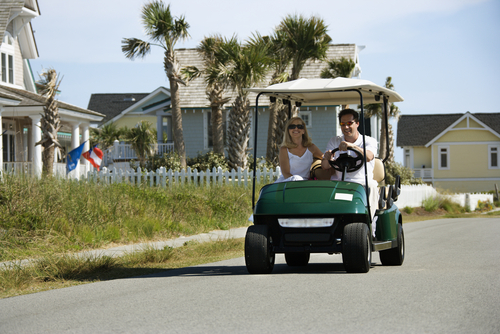
Florida’s Golf Cart Laws: Why Streets Became Deadly Playgrounds
Florida law prohibits golf cart operation on public roads except on designated county roads, municipal streets, or roads maintained by water control districts that have been specifically designated for golf cart use. Despite these restrictions, golf carts have proliferated on streets throughout retirement communities, creating a perfect storm for accidents. A golf cart accident lawyer in The Villages understands that before making such a designation, the responsible local governmental entity must first determine that golf carts may safely travel on or cross the public road or street, considering factors including the speed, volume, and character of motor vehicle traffic using the road or street. Yet many designations appear to prioritize convenience over safety, particularly when golf carts share roads with vehicles traveling at much higher speeds.
💡 Pro Tip: Check with local authorities whether the road where an accident occurred was officially designated for golf cart use – improper designations can establish governmental liability in injury cases.
The Evolution of Golf Cart Regulations: From Recreation to Transportation Crisis
The transformation of golf carts from recreational vehicles to primary transportation has outpaced safety regulations, creating a timeline of increasing danger. Golf Cart and Low-Speed Vehicle Safety has been an ongoing and increasing concern in FDOT District Two, with these vehicles seen throughout Northeast Florida golf cart neighborhoods and RV resorts. Understanding this evolution helps victims and their families recognize why accidents have become so common and severe. A golf cart accident lawyer in The Villages can trace how regulatory gaps contributed to specific crashes, establishing patterns of negligence that strengthen compensation claims.
- Pre-2000s: Golf carts primarily confined to golf courses with minimal street exposure
- 2000-2010: Retirement communities begin incorporating golf cart paths and designated street crossings
- 2011-2019: Study period showing 875 crashes with devastating consequences, revealing systemic safety failures
- May 11, 2023: Governor DeSantis signed HB 949 tightening restrictions for teens driving golf carts
- October 1, 2023: New restrictions take effect, but adult operation remains largely unchanged
💡 Pro Tip: Recent legislative changes may affect liability in accidents involving teenage drivers – always verify the driver’s age and whether they complied with current restrictions.
Securing Justice with a Golf Cart Accident Lawyer in The Villages
When golf cart crashes result in serious injuries or death, victims need aggressive legal representation that understands both the unique dynamics of these accidents and Florida’s complex liability laws. Glover Law Firm brings extensive experience handling golf cart collision cases, recognizing that 48% of all golf cart crashes in The Villages resulted in hospitalization, severe trauma, or death. Our team investigates whether proper safety protocols were followed, roads were appropriately designated, and all liable parties are held accountable. Working with a golf cart accident lawyer in The Villages means having an advocate who understands that compounding the issue, golf carts lack the safety features and protection that regular cars have, making even low-speed collisions potentially catastrophic.
💡 Pro Tip: Multiple parties may share liability in golf cart accidents, including drivers, golf cart manufacturers, rental companies, and municipalities that improperly designated roads – comprehensive investigation uncovers all potential sources of compensation.
The Deadly Design Flaw: Why Golf Carts Were Never Meant for Streets
Golf carts fundamentally differ from street-legal vehicles in ways that make road use inherently dangerous. A golf cart accident lawyer in The Villages recognizes these vehicles lack airbags, crumple zones, reinforced frames, and most critically, the speed capability to keep pace with traffic flow. Golf carts must meet specific equipment requirements including efficient brakes, reliable steering, safe tires, rearview mirror, and red reflectorized warning devices, but these minimal standards fall far short of automotive safety requirements. The physics of a 1,000-pound golf cart meeting a 4,000-pound SUV creates devastating injury patterns.
Ejection: The Hidden Killer in Golf Cart Crashes
Of crashes resulting in hospitalization, severe trauma, or death, ejection occurred in 27% of cases, representing one of the most lethal aspects of golf cart accidents. Without seat belts, doors, or structural protection, occupants become projectiles during collisions or sudden maneuvers. This ejection risk multiplies when golf carts travel on streets with higher speed limits, sharper turns, and unexpected obstacles. The human body simply cannot withstand the forces generated when thrown from a moving vehicle onto pavement.
💡 Pro Tip: After-market safety equipment like seat belts or doors may actually demonstrate awareness of danger – document any safety modifications that could have prevented ejection injuries.
Vulnerable Victims: Why Children and Elderly Face Greatest Risk
Children are particularly vulnerable and more often injured in golf cart accidents than adults, with injuries including life-altering head, neck, or spine trauma. The combination of lower body weight, developing bones, and tendency to ride in positions of greatest ejection risk creates catastrophic outcomes. A golf cart accident lawyer in The Villages frequently sees cases where children suffered permanent disabilities from crashes that would have caused minor injuries in properly equipped vehicles. The elderly face different but equally serious risks, with brittle bones, slower reaction times, and medication effects compounding injury severity.
The Intersection of Age and Infrastructure
Golf cart crash analysis reveals that age-related factors intersect dangerously with infrastructure designed for younger, more agile populations. Street crossings require quick acceleration that golf carts cannot provide, while judgment of approaching vehicle speeds becomes harder with age-related vision changes. These human factors combine with mechanical limitations to create predictable tragedy patterns that experienced attorneys recognize and document for stronger cases.
💡 Pro Tip: Medical records showing pre-existing conditions don’t weaken injury claims – they often demonstrate how foreseeable it was that certain populations would suffer severe harm in crashes.
Legal Remedies: Beyond Traffic Citations to Real Accountability
While violations of golf cart operation laws are noncriminal traffic infractions punishable as moving or nonmoving violations under chapter 318, civil liability extends far beyond simple citations. Golf cart accident compensation in The Villages often involves multiple insurance policies, premises liability claims against communities that created dangerous conditions, and product liability actions against manufacturers who marketed recreational vehicles for transportation use. Understanding these overlapping legal theories requires sophisticated analysis that goes beyond typical car accident cases.
The New Landscape After HB 949
Representative Cyndi Stevenson, who represents parts of St. Johns, filed the HB 949 legislation, which The Florida Sheriff’s Association supported, creating new standards for teenage operators. However, this legislation also highlighted the ongoing dangers for all age groups, potentially strengthening negligence claims by establishing legislative recognition of golf cart dangers. Courts may view violations of these enhanced safety requirements as evidence of gross negligence, potentially supporting punitive damage awards.
💡 Pro Tip: Legislative history and safety advocacy statements can become powerful evidence showing defendants knew or should have known about golf cart dangers – save news articles and public safety warnings.
Frequently Asked Questions
Understanding Golf Cart Accident Claims
Navigating the aftermath of a golf cart accident raises numerous questions about rights, responsibilities, and potential compensation. These answers address the most common concerns faced by victims and their families.
💡 Pro Tip: Write down all questions before meeting with an attorney – emotional trauma can make it difficult to remember important concerns during consultations.
Taking Action After Golf Cart Accidents
Time-sensitive decisions following golf cart crashes can significantly impact claim outcomes. Understanding immediate steps and long-term considerations helps preserve both health and legal rights.
💡 Pro Tip: Even seemingly minor golf cart accidents can cause serious injuries that manifest days later – always seek immediate medical evaluation and follow-up care.
1. Why are golf cart accidents on streets more deadly than on golf courses?
Streets introduce multiple fatal factors absent on golf courses: higher speeds from both golf carts and other vehicles, harder surfaces than grass, presence of curbs and fixed objects, and mixing with much heavier vehicles. Golf carts may cross state highways only at designated intersections with Department of Transportation approval, but even approved crossings create extreme danger due to speed differentials. The study data showing 48% of crashes resulting in death or severe injury primarily reflects street accidents.
2. Can I sue if the golf cart was operating legally on a designated road?
Yes, legal operation doesn’t eliminate liability for negligent driving or dangerous road conditions. Golf carts may operate on sidewalks adjacent to state highways if they yield to pedestrians and the sidewalks are at least 5 feet wide, but accidents still create liability. A golf cart accident lawyer in The Villages examines whether the designation itself was negligent given traffic patterns, whether proper warnings existed, and if all parties fulfilled their duty of care despite technical compliance with regulations.
3. Who can be held liable in a golf cart street accident?
Liability often extends beyond the golf cart driver to include: the community or municipality that designated unsafe roads, golf cart rental companies that failed to warn about street dangers, manufacturers who marketed carts for street use without adequate safety features, property owners who created dangerous conditions, and drivers of other vehicles who failed to exercise care around vulnerable golf cart occupants. Each potentially liable party may have different insurance coverage available for compensation.
4. What damages are available for golf cart accident victims?
Compensation can include medical expenses (emergency treatment, surgery, rehabilitation), lost wages and reduced earning capacity, pain and suffering, permanent disability or disfigurement, wrongful death damages for families, property damage, and in cases of gross negligence, punitive damages. The severity shown in the data – with 55% of serious crashes requiring hospitalization – often justifies substantial compensation awards.
5. How long do I have to file a golf cart accident lawsuit in Florida?
Florida’s statute of limitations for negligence-based personal injury claims is two years from the date of injury for accidents occurring on or after March 24, 2023, reduced from the previous four-year window under House Bill 837. Wrongful death claims carry a separate two-year deadline that runs from the date of death, not the date of the underlying incident. Claims involving governmental entities for dangerous road designations carry additional procedural hurdles, including written notice requirements that may arise well before any lawsuit can be filed. Given these compressed and overlapping deadlines, consulting a golf cart accident lawyer in The Villages as soon as possible after an accident is critical to preserving your right to compensation.
Work with a Trusted Golf Cart Accident Lawyer
Golf cart accidents on streets represent a preventable tragedy that continues claiming lives and causing catastrophic injuries throughout Florida’s retirement communities. The data speaks volumes – these aren’t minor fender-benders but serious crashes with life-altering consequences. When insurance companies minimize claims or communities deny responsibility for dangerous road designations, victims need experienced legal representation that understands both the unique aspects of golf cart accidents and the broader implications for safety reforms. Taking action not only secures compensation for individual victims but also pressures communities and lawmakers to prioritize safety over convenience.
When navigating the aftermath of a golf cart accident, don’t go it alone. Let Glover Law Firm be your guiding light in these turbulent times. Reach out to us at 352-205-4495 or contact us to explore your legal options and ensure your rights are safeguarded.