
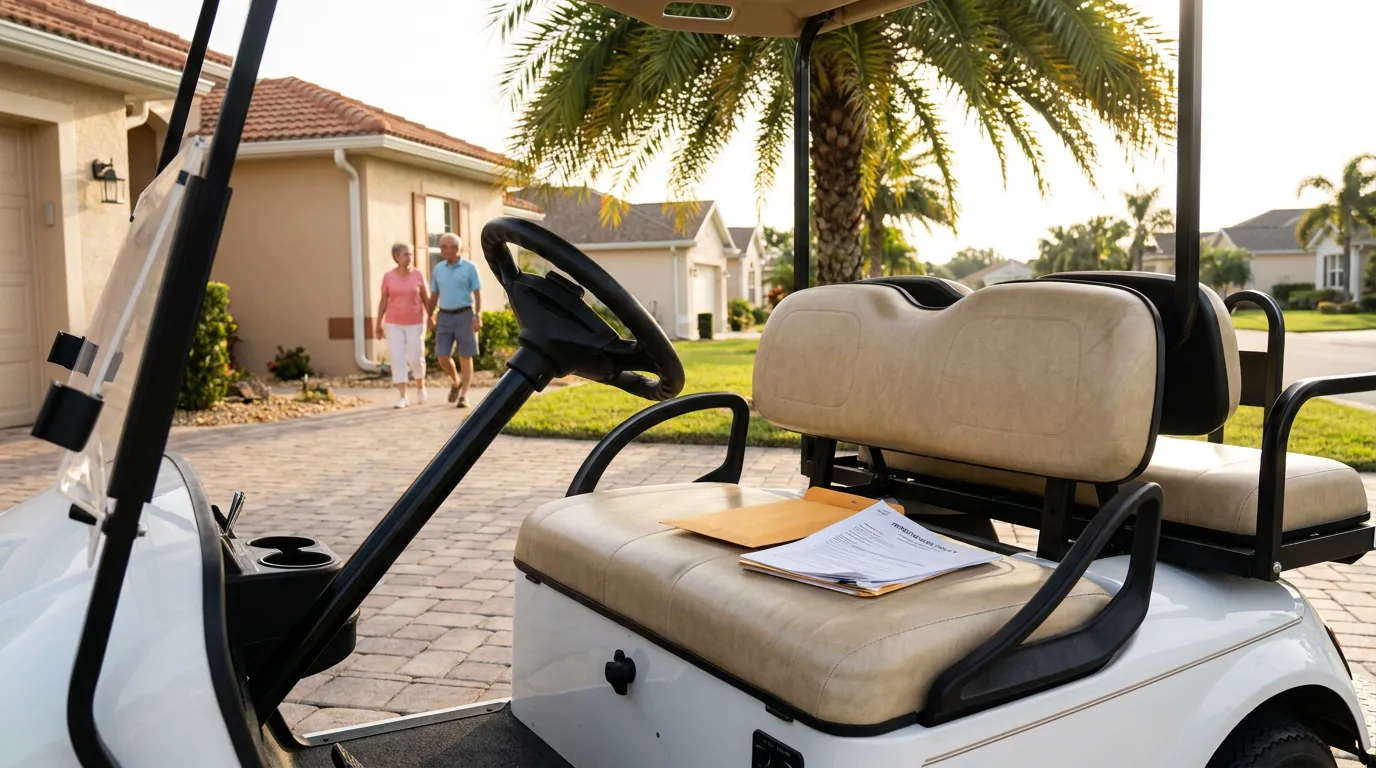
Why Golf Cart Coverage in The Villages Is More Complicated Than It Looks
Key Takeaways: A standard homeowners policy typically won’t protect you after a golf cart accident in The Villages because it’s not a motor vehicle liability policy and may deny roadway operation claims. Florida distinguishes between standard golf carts (capped at 20 mph, no state insurance mandate) and low-speed vehicles (20-25 mph, requiring registration, title, PIP, and PDL). Where the crash occurs matters, as carts may only operate on designated paths and roads, with local ordinances potentially stricter. Florida’s modified comparative fault rule bars recovery if you’re more than 50 percent at fault. Most claims must be filed within two years. To close coverage gaps, consider dedicated golf cart liability insurance, document accidents thoroughly, and seek legal guidance after a crash.
A standard homeowners policy is often inadequate after a golf cart accident in The Villages, with many residents discovering this only when claims are denied. Homeowners policies cover your dwelling and limited personal liability, not vehicle operation on public or semi-public roads. When a collision causes serious injuries, the gap between assumed coverage and actual protection can be financially devastating.
If you were hurt in a crash and are worried about coverage, the team at Glover Law Firm can help. Call us at 352-205-4495 or reach out through our online contact page to discuss your situation.
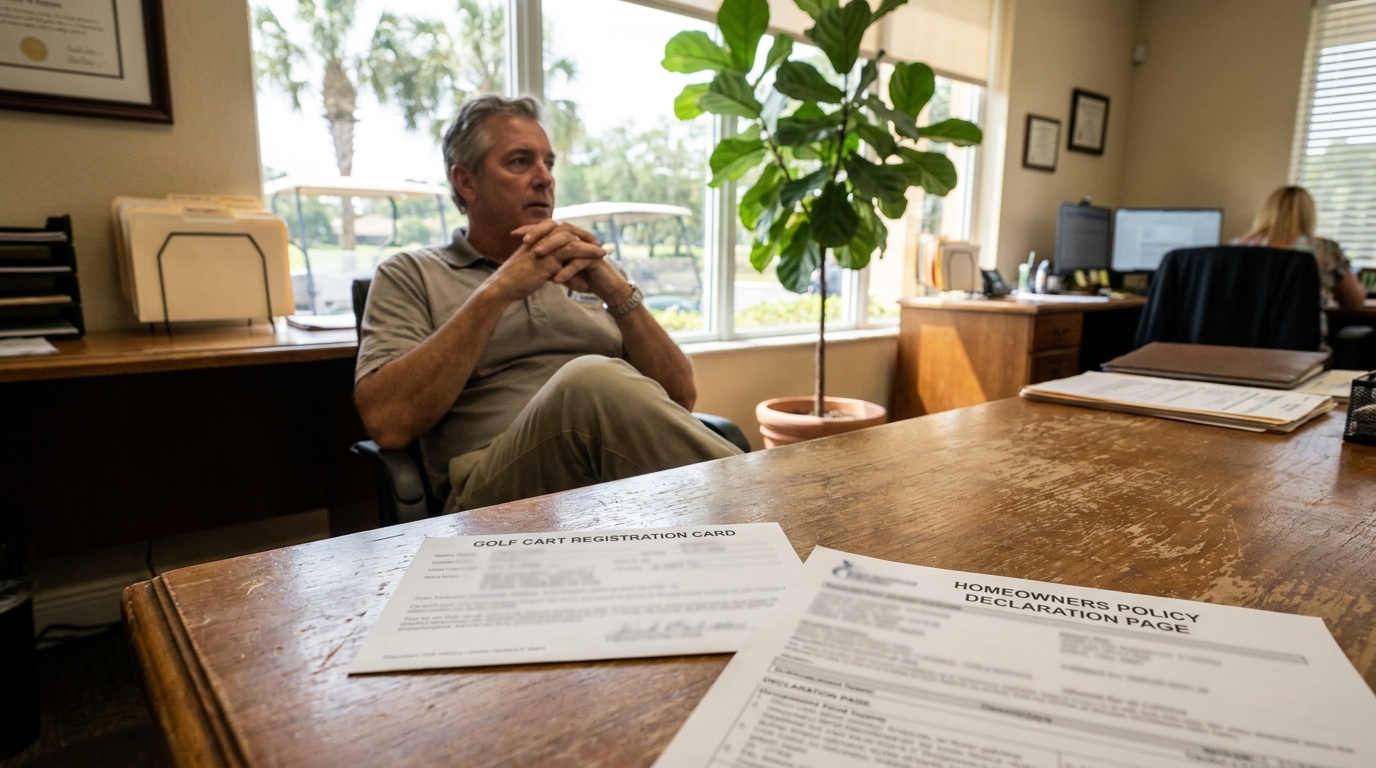
How Florida Classifies Golf Carts and Why It Matters for Coverage
Florida draws a sharp legal line between golf carts and low-speed vehicles, and that distinction drives insurance obligations. Under Florida law, a golf cart is designed for recreational use and cannot exceed 20 miles per hour, while low-speed vehicles (LSVs) reach speeds between 20 and 25 miles per hour. This difference isn’t cosmetic, the two categories carry entirely different financial responsibility rules.
LSVs must be registered, titled, and insured, but standard golf carts aren’t subject to the same state insurance mandate. Florida requires LSVs to carry personal injury protection (PIP) and property damage liability (PDL) coverage of at least $10,000 each, similar to automobiles. Standard golf carts have no comparable requirement, which is why many owners rely on homeowners policies that may not respond to roadway crashes.
💡 Pro Tip: If your cart has been modified to travel faster than 20 mph, it may legally qualify as an LSV. That reclassification triggers registration, titling, and insurance duties your homeowners policy won’t satisfy.
Golf Cart Insurance Claims The Villages Florida Residents Should Understand
The biggest risk for Villages residents is assuming a homeowners policy functions like auto insurance when it doesn’t. Florida defines a motor vehicle liability policy as one insuring against bodily injury, death, and property damage arising from motor vehicle use, under Fla. Stat. § 324.021(8). A homeowners policy generally isn’t a motor vehicle liability policy under this definition, so it may not satisfy financial responsibility requirements when a cart causes injury on a public or semi-public road.
This creates what many call the golf cart insurance gap, surfacing most often after an accident. When a cart is operated on a roadway and someone is hurt, the homeowners insurer may deny the claim on grounds that the loss arose from vehicle operation rather than a covered home-related risk. Learn more about how different policies respond in our overview of homeowners policy golf cart coverage.
The table below summarizes key differences affecting golf cart insurance claims The Villages Florida residents may face:
| Feature | Standard Golf Cart | Low-Speed Vehicle (LSV) |
|---|---|---|
| Top speed | Not over 20 mph | 20 to 25 mph |
| State insurance mandate | None required | PIP and PDL required |
| Registration and title | Not required | Required |
| Permitted road speed limit | 30 mph or less | 35 mph or less |
Where the Accident Happens Can Change Everything
Florida law restricts where golf carts may legally operate, and location can affect both liability and coverage. Golf cart operation on public roads is prohibited except as the statute allows, under Fla. Stat. § 316.212. A golf cart may generally be operated only on county roads or municipal streets that local government has designated for golf cart use after a safety review, under Fla. Stat. § 316.212(1).
Even within The Villages, not every path or road is treated equally under law. Florida permits reasonable golf cart operation within self-contained retirement communities when the cart is equipped and operated as required, under Fla. Stat. § 316.2125(1). However, local governments and the Department of Transportation retain authority to restrict or prohibit cart use on certain roads, and State Highway System crossings require DOT review and approval under Fla. Stat. § 316.212(2)(a).
Speed and road type also limit where carts can legally travel. Golf carts may be operated only on state roads posted at 30 miles per hour or less, with highway crossings permitted at intersections posted at 45 miles per hour or less, under Fla. Stat. § 316.2126(1)(c), (d). The Villages maintains an extensive cart-path network, and a detailed Villages golf cart safety analysis illustrates how heavily these paths intersect with public roads.
💡 Pro Tip: Photograph the exact crash location, including signage and speed-limit postings. Whether the accident occurred on a designated path, sidewalk, or restricted road can influence both liability and whether a homeowners insurer tries to deny the claim.
Local Ordinances Can Widen the Coverage Gap
Local governments may adopt golf cart rules stricter than state law, complicating insurance claims. Florida expressly allows local governmental entities to enact ordinances regarding golf cart operation and equipment that are more restrictive than the statute, under Fla. Stat. §§ 316.2125(3) and 316.212(8)(a). The Villages and surrounding Sumter, Lake, and Marion county areas may impose additional requirements affecting claim evaluation.
If a cart was operated unlawfully under a local ordinance, an insurer may argue the loss isn’t covered. A homeowners insurance golf cart denial can arise when the insurer asserts the cart was used in a restricted area or in violation of an equipment rule.
Common scenarios contributing to a golf cart insurance gap include:
- Operating a cart on a road not designated for golf cart use
- Driving on a sidewalk where a local ordinance prohibits it
- Exceeding posted speed-limit restrictions tied to cart operation
- Using a modified cart that now qualifies as an LSV without proper insurance
Proving Fault and Protecting Your Right to Recover
Florida uses a modified comparative fault rule that can bar recovery entirely. Under Fla. Stat. § 768.81(6), a party found to be greater than 50 percent at fault for their own harm may not recover any damages. For a Villages golf cart crash claim, how fault is assigned can be just as important as which insurance policy applies.
Building a strong golf cart injury claim depends on preserving evidence early. Negligence claims require proof of duty, breach, causation, and damages, and documentation such as medical records, photographs, and witness statements often makes the difference. A knowledgeable golf cart accident lawyer The Villages residents trust can help gather this evidence while you focus on recovery.
💡 Pro Tip: Seek medical evaluation even if injuries seem minor. Gaps in treatment are frequently used by insurers to argue that an injury wasn’t serious or was unrelated to the crash.
Deadlines That Can Quietly End Your Claim
Florida sets a two-year window for most golf cart accident lawsuits, and missing it can permanently bar recovery. Actions founded on negligence must generally be brought within two years under Fla. Stat. § 95.11(5)(a), and wrongful death actions carry the same two-year limit under Fla. Stat. § 95.11(5)(e).
Courts interpret exceptions to these deadlines narrowly, so don’t assume extra time is available. Tolling or delayed-discovery arguments may apply only in limited circumstances and are highly fact-dependent. Because the legal window is tight, consulting a golf cart accident attorney promptly helps preserve your rights before evidence fades or deadlines pass.
Frequently Asked Questions
-
Does my homeowners policy cover a golf cart accident on a public road?
Often it doesn’t. Because a homeowners policy generally isn’t a motor vehicle liability policy under Fla. Stat. § 324.021(8), it may exclude or deny losses arising from roadway operation.
-
Is golf cart insurance required in Florida?
Standard golf carts carry no state insurance mandate, unlike LSVs. LSVs must carry PIP and PDL coverage, but golf carts capable of no more than 20 mph aren’t subject to that requirement. Dedicated golf cart liability insurance can help close this gap.
-
What if my cart was modified to go faster?
A modified cart may legally become an LSV. Once a cart exceeds 20 mph, it may be reclassified, triggering registration, titling, and insurance duties. Your homeowners policy won’t satisfy the insurance obligations that come with that reclassification.
-
How long do I have to file a claim in The Villages?
Generally two years for negligence and wrongful death. Under Fla. Stat. § 95.11(5)(a) and (e), most claims must be filed within two years, subject to narrow exceptions courts apply cautiously.
-
Can I recover if I was partly at fault?
Possibly, if you weren’t more than 50 percent at fault. Under Fla. Stat. § 768.81(6), being found more than half responsible bars recovery, so fault allocation is critical.
Protecting Yourself Before and After a Crash
A homeowners policy alone frequently leaves Villages residents exposed after a golf cart collision, especially when the accident involves a public road, restricted area, or local ordinance violation. Understanding how Florida classifies golf carts, where they may legally operate, and how comparative fault and filing deadlines work can make the difference between full recovery and a denied claim. Careful documentation and prompt legal guidance are essential.
If you or a loved one was injured and are facing a coverage dispute, Glover Law Firm is ready to help you pursue fair compensation. Call us today at 352-205-4495 or visit our secure contact form to schedule a consultation and protect your rights.