
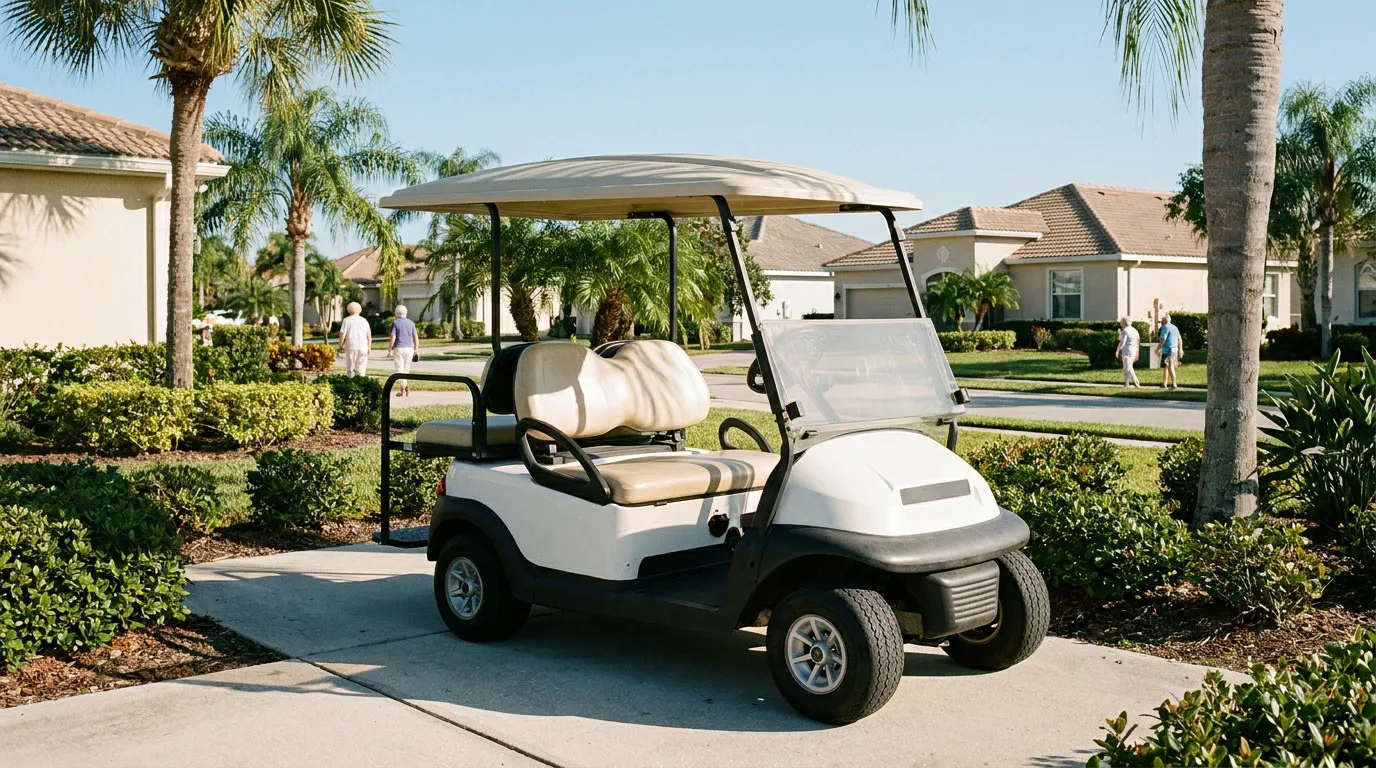
Understanding Passenger Rights in a Villages Golf Cart Crash
Key Takeaways: Golf cart passengers injured in a Villages crash generally have the right to file an injury claim, since they rarely control the cart yet often suffer serious harm. Florida law allows injured passengers to pursue multiple at-fault parties, including the driver and cart owner, who may be held vicariously liable under the dangerous instrumentality doctrine. Under Florida’s modified comparative negligence rules, partial fault reduces but does not bar recovery unless a passenger is more than 50 percent at fault. Because coverage is often inadequate, identifying every applicable auto, homeowners, and umbrella policy is central to meaningful recovery. Florida statutes governing where carts may lawfully operate help establish negligence, and statutory damage rules define recoverable losses. Serious cases have produced judgments exceeding $50 million, making careful investigation and legal guidance essential.
If you were riding as a passenger when a golf cart crashed in The Villages, you generally have the right to pursue an injury claim. Passengers rarely control how a cart is driven, yet they often suffer the most serious harm. Florida law recognizes that injured passengers may hold at-fault parties accountable, often including multiple defendants. The path to compensation depends on the facts, available insurance, and how fault is apportioned.
If you or a loved one was hurt riding in a cart, the team at Glover Law Firm is ready to help. Call us at 352-205-4495 or reach out through our online contact page to discuss what happened.
Yes, Injured Passengers Can Pursue a Claim
A golf cart passenger injured in a Florida crash generally has multiple potential defendants to consider. Legal commentary reviewing Florida law notes that an injured person often has at least two potential targets: the cart’s owner and the driver. This distinction matters because the owner and operator are frequently different people, especially in The Villages where carts are borrowed, shared, and loaned between neighbors and family.
This is not theoretical. In a well-documented Florida case, a 16-year-old driver ran a stop sign, and the resulting collision ejected a 12-year-old passenger who suffered catastrophic head injuries. That litigation produced judgments reported to exceed $50 million, with figures cited as high as $68 million, and the injured child pursued both the cart owner and the driver. These outcomes illustrate that passenger claims are real, substantial, and firmly grounded in Florida negligence principles.
💡 Pro Tip: If you were a passenger, document who owned the cart and who was driving immediately. These may be separate parties carrying different insurance coverage.
Who Can Be Held Responsible After a Golf Cart Wreck
Responsibility after a golf cart accident The Villages FL residents experience can extend beyond the driver. Identifying every potentially liable party is critical. Depending on circumstances, several individuals or entities may share fault.
Potential defendants and responsible parties include:
- The golf cart driver whose negligent operation caused the crash
- The golf cart owner, even if not driving at the time
- A course or property owner who failed to maintain safe conditions or warn of hazards
- Another motorist involved in a collision with the cart
The Dangerous Instrumentality Doctrine
Florida courts have treated golf carts as "dangerous instrumentalities," with significant consequences for owners. Under this principle, a cart owner may face vicarious liability for negligent operation by someone the owner permitted to drive, even when absent. For injured passengers, this opens an additional avenue when the driver alone lacks sufficient assets or insurance.
Comparative Fault and Shared Blame
Florida applies a comparative negligence framework that shapes how damages are divided. Effective March 24, 2023, HB 837 amended Fla. Stat. §768.81 to adopt modified comparative negligence: a party more than 50 percent at fault for their harm cannot recover damages, while a party 50 percent or less at fault has any award reduced by that percentage. The apportionment depends heavily on specific evidence.
💡 Pro Tip: Passengers are often assigned little fault, but insurers may argue otherwise. Preserving witness statements and photographs early protects against unfair reductions.
How Florida Law Governs Golf Cart Operation
Where and how a golf cart may lawfully operate can be central to proving negligence. Florida statutes set defined conditions for cart use, and operating outside those conditions may support negligence when a passenger is hurt. Under Fla. Stat. §316.2126(1), golf carts must comply with operational and safety requirements and may generally operate only on roads with posted speed limits of 30 miles per hour or less. Crossings of portions of the State Highway System with a posted speed limit of 45 miles per hour or less are permitted, but only at intersections with official traffic control devices; crossings of roads with speed limits exceeding 45 mph are not authorized under this provision.
Access to the State Highway System is even more restricted. Under Fla. Stat. §316.212(2), a golf cart may operate on that system only under narrow conditions, such as crossings the Department of Transportation has reviewed and approved. You can review Florida golf cart traffic laws for context. When a cart is driven where prohibited, that fact helps establish breach of duty.
To better understand your position, review what legal rights you have in a Villages golf cart accident before speaking with an adjuster.
💡 Pro Tip: If your crash happened on a roadway that seemed too fast or busy for cart traffic, tell your attorney. The location may be meaningful to the negligence analysis.
Navigating Golf Cart Insurance Claims The Villages Florida
Insurance coverage is often the practical center of golf cart insurance claims The Villages Florida residents pursue. Recovering meaningful compensation depends on identifying every applicable policy. Legal commentary stresses examining an owner’s auto, homeowners, and umbrella policies, while cautioning that limits are rarely high enough for catastrophic judgments.
Because coverage is frequently inadequate for serious injuries, Florida recognizes rights of contribution and indemnification among joint tortfeasors. An injured passenger may pursue several at-fault parties, who may in turn seek indemnification from one another. The Florida Bar Journal’s discussion of potential owner liability underscores how large exposure can become.
| Policy Type | Why It May Matter |
|---|---|
| Auto insurance | May respond depending on how the cart and crash are classified |
| Homeowners | Can sometimes provide coverage for cart-related liability |
| Umbrella | May add limits above underlying auto or homeowners policies |
Sorting through claims can be complex, and coverage availability depends on policy language and facts. Knowledgeable review ensures no source of recovery is overlooked.
Damages an Injured Passenger May Recover
Florida law defines recoverable damages categories, and they can be significant. Under Fla. Stat. §768.81(1), a "negligence action" broadly includes civil claims for damages based on negligence, strict liability, products liability, and similar theories, where most golf cart passenger claims fall. You can read the full framework in Chapter 768 of the Florida Statutes governing negligence and damages.
Economic vs. Noneconomic Losses
The statute specifically defines recoverable economic damages. These generally include past and future lost income reduced to present value, medical and funeral expenses, lost support and services, replacement value of lost property, and other economic losses that would not have occurred but for the injury. Given that Florida golf cart crashes have produced judgments exceeding $50 million for a passenger’s traumatic brain injury, the stakes in serious cases can be substantial. The actual value always depends on specific facts and evidence.
Frequently Asked Questions
1. Can a passenger sue if the driver was a friend or family member?
Yes, passengers may pursue claims even when the driver is a friend or relative. Recovery typically comes through insurance rather than personal assets, and the owner may be a separate defendant. Whether a claim proceeds depends on facts and available coverage.
2. What if I was partly at fault as a passenger?
Under Florida’s modified comparative negligence system, partial fault does not automatically bar recovery. A passenger 50 percent or less at fault may still recover, with any award reduced by their share, but a passenger more than 50 percent at fault is barred under the standard effective March 24, 2023. Passengers are often assigned little fault.
3. How long do I have to file a golf cart injury claim?
Florida sets strict deadlines for civil negligence lawsuits. For negligence claims accruing on or after March 24, 2023, the limitations period is generally two years, reduced from the prior four years under HB 837. Seek guidance early rather than assume an extension applies.
4. What insurance covers a golf cart crash in The Villages?
Coverage may come from auto, homeowners, or umbrella policies, depending on language and facts. No single policy applies in every case, and limits are often insufficient for severe injuries. Identifying all available coverage is key.
5. Do I need a lawyer to handle a passenger injury claim?
You are not required to hire counsel, but these cases can involve multiple defendants and insurers. A The Villages FL golf cart lawyer can help document injuries, identify responsible parties, and respond to adjuster tactics.
Protecting Your Right to Recover After a Crash
Golf cart passengers injured in The Villages generally have real and enforceable rights to seek compensation. Florida law recognizes claims against negligent drivers, cart owners under the dangerous instrumentality doctrine, and other responsible parties. Because coverage is often limited and fault can be contested, careful investigation makes a meaningful difference. If you are researching golf cart insurance claims The Villages Florida families depend on, understanding these principles is important. Explore our resources for handling a golf cart accident The Villages FL claim.
If you were injured as a passenger, do not wait to protect your golf cart passenger rights. Contact Glover Law Firm today by calling 352-205-4495 or reaching out through our secure contact form to discuss your situation and the compensation you may be entitled to pursue.