
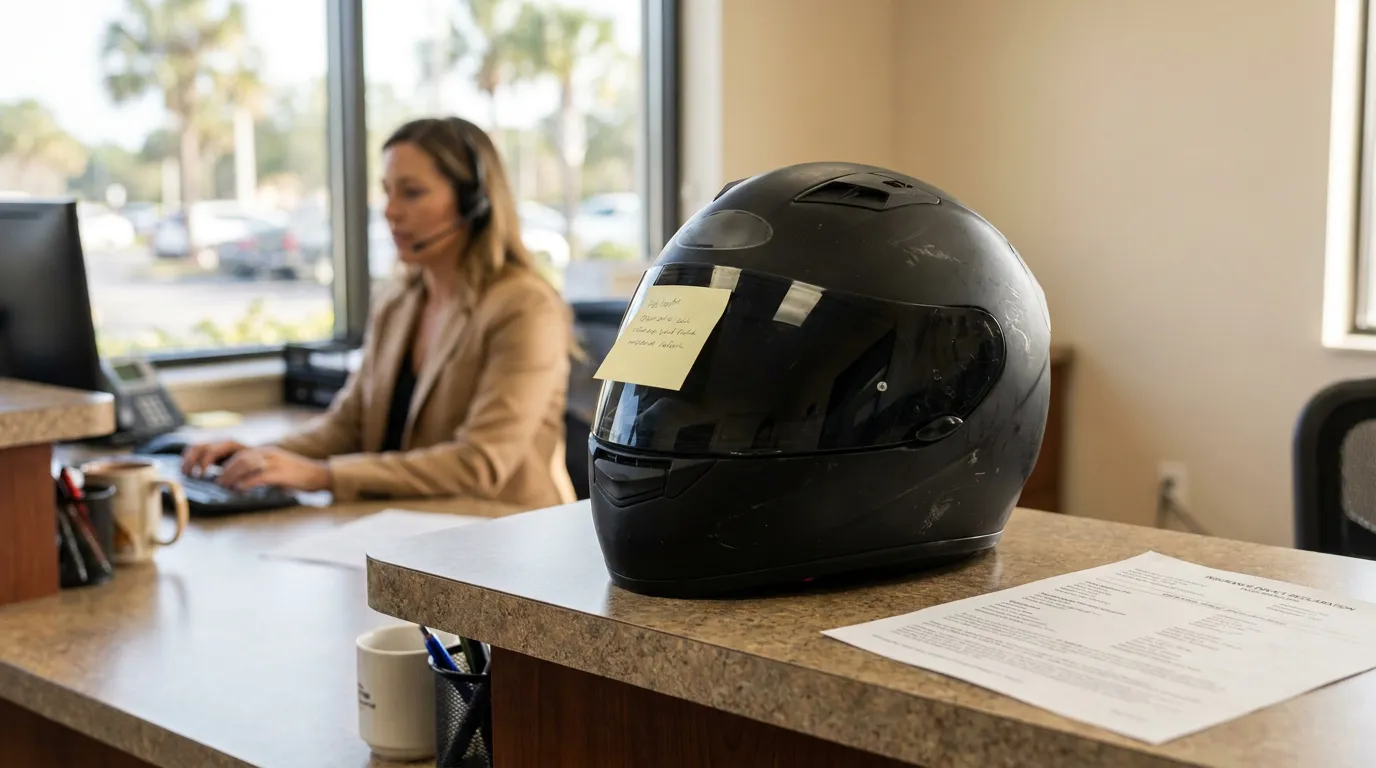
Florida Statute 316.209 Lane Splitting Meets the 2026 Helmet Insurance Debate
Key Takeaways: Florida lets riders 21 and older go helmet-free only if they carry at least $10,000 in medical benefits coverage, a rule that shapes how injury claims are valued. Motorcycles sit outside Florida’s no-fault/PIP system, so injured riders must pursue the at-fault driver directly. The florida statute 316.209 lane splitting prohibition can trigger comparative-fault arguments that reduce recovery. Repeated legislative efforts to repeal PIP have failed, so PIP remains Florida law heading into 2026. Defendants often argue that a missing helmet or lane position increased injury severity. Injured motorcyclists in The Villages benefit from documenting negligence and damages early.
Riders across Marion County are entering 2026 with real questions about how insurance rules affect their claims. Florida’s approach to helmets, coverage, and lane use is unusual, and small details can shift thousands of dollars in a settlement. For anyone recovering from a Motorcycle Accident in The Villages/FL, understanding these rules early can make a meaningful difference.
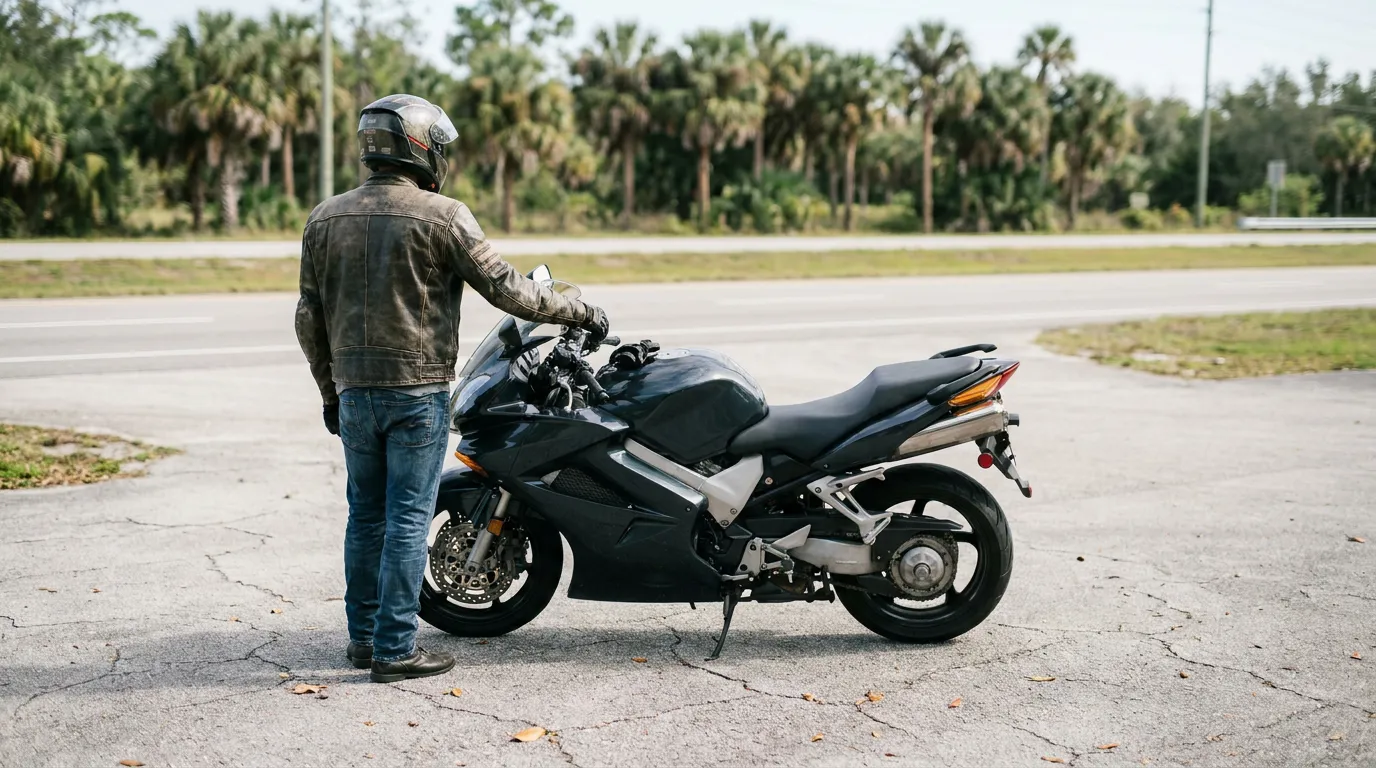
The Legal Backdrop Behind Florida Helmet Insurance 2026
Florida is the rare state that does not broadly mandate motorcycle insurance, yet still holds riders financially responsible for negligence. According to widely cited industry data, while 49 states require motorcycle insurance, Florida does not mandate coverage for most riders, though financial responsibility remains required after a crash. That distinction matters because many rider claims ultimately depend on the at-fault driver’s coverage. You can review the underlying Florida motorcycle insurance data for context.
The helmet rule is where insurance and safety intersect most directly. Under Florida law, riders over 21 may legally ride without a helmet only if they carry insurance with at least $10,000 in medical benefits coverage. Riders under 21 must wear a helmet regardless of coverage. This 10000 medical benefits motorcycle requirement fills a gap that other drivers cover through personal injury protection.
Motorcycles are excluded from Florida’s no-fault system, and this exclusion drives much of the strategy in rider claims. PIP coverage carried on a car does not extend to motorcycle injuries, so injured riders must pursue the at-fault driver for medical bills and lost income. Florida’s statute confirms that tort immunity applies only where both parties carry qualifying PIP coverage, which motorcyclists typically do not. That is why the separate helmet-insurance requirement carries significant weight for riders.
How Lane Position Law Affects Rider Compensation Florida Claims
Florida grants motorcyclists full use of a traffic lane while flatly prohibiting lane splitting. State law entitles all motorcycles to full lane use and bars other motorists from crowding a rider out, but it prohibits operating a motorcycle between lanes or between rows of vehicles. You can read the relevant Florida motorcycle lane laws to see the full statutory text.
A violation of the florida statute 316.209 lane splitting provision is a traffic infraction, not a crime. That classification matters because a noncriminal infraction can still be used as evidence of negligence in a civil injury claim. An at-fault driver who squeezes a motorcycle out of its lane may bear liability, while a rider accused of lane splitting can face a comparative-fault argument that reduces compensation.
Florida also treats motorcyclists as equal roadway users. A rider generally has the same rights and duties of care as any other driver, which supports a claim that a negligent car driver owed the rider the same duties owed to other motorists. This equal-footing principle can strengthen a plaintiff’s negligence theory.
The Comparative Fault Factor
Florida’s comparative fault framework can reduce a rider’s recovery, and, since 2023, can eliminate it entirely. Under the modified comparative negligence rule adopted in HB 837, any person found to be more than 50% at fault for their own injuries is completely barred from recovering any damages, while a rider 50% or less at fault has damages reduced by their assigned share. As the Florida Bar Journal has explained, a negligent tortfeasor’s degree of liability is generally limited to his or her own degree of fault. Defendants can plead and prove that another party caused the injury, which reduces what they owe.
Helmet-related arguments often surface within this framework. Insurers may argue that a rider without a helmet contributed to injury severity, raising the familiar motorcycle damages helmet dispute. Because a defendant’s liability is capped at their own share of fault, how a jury apportions that fault can significantly influence the final number, and, if a rider is assigned more than half the fault, can bar recovery altogether.
A Hypothetical Crash Near The Villages
Imagine a rider heading home when a driver makes an unsafe left turn. The rider, over 21 and legally helmet-free with the required $10,000 in medical benefits coverage, suffers a fractured leg and concussion. Because motorcycles fall outside PIP, the rider cannot rely on no-fault benefits and must pursue the at-fault driver.
Now suppose the driver’s insurer argues the rider was partly to blame. The insurer might claim the rider was positioned between lanes, invoking the helmet defense motorcycle claim and a lane-splitting theory to shift fault. Defending against these assertions requires careful documentation, because enough shifted fault can reduce or eliminate recovery. Photographs, witness statements, and prompt medical records often become the difference between a fair and a discounted outcome.
Adding another layer, suppose the at-fault vehicle was borrowed. Florida caps a private owner’s vicarious liability but adds exposure when the driver is uninsured or underinsured. A natural-person owner who loans a vehicle is generally liable up to $100,000 per person and $300,000 per incident for bodily injury, plus up to an additional $500,000 in economic damages when the permissive user carries limited coverage. That structure can meaningfully expand the compensation pool for an injured rider.
Practical Steps That Support Rider Claims
Injured riders can take concrete steps that tend to strengthen a claim. Thorough documentation generally helps establish negligence and damages. The following practices often prove valuable after a crash.
- Seek prompt medical care and keep every bill, record, and treatment note to support your damages.
- Photograph the scene, vehicles, and lane markings to counter potential lane-splitting or positioning arguments.
- Collect witness contact information early, before memories fade.
- Preserve your insurance details, including any policy meeting the $10,000 medical benefits threshold.
- Track lost wages and out-of-pocket costs to quantify economic damages accurately.
Riders should also be aware of procedural protections. Florida insurers providing PIP benefits must mail or deliver a required rights notice within 21 days after receiving notice of an accident. Although motorcycles sit outside PIP, this notice rule can matter when other vehicles or household policies are involved.
Staying informed about pending law is equally important. Bills HB 1181 and SB 1256 proposed repealing Florida’s no-fault system and replacing PIP with higher mandatory liability coverage, raising bodily-injury minimums to $25,000 per person and $50,000 per incident, with a proposed July 2026 effective date, but HB 1181 was indefinitely postponed and withdrawn from consideration on May 3, 2025, and its Senate companion, SB 1256, died in Banking and Insurance on June 16, 2025. Later repeal efforts (SB 522 and HB 769) also died in committee in March 2026, so PIP remains Florida law. If a future repeal ever passes, such a change could materially alter how rider claims are valued. For ongoing updates and related guidance, our firm’s helmet defense motorcycle claim resources may be useful.
How Does This Impact Me?
Does the helmet rule affect how much I can recover?
It can, but not automatically. If you were legally helmet-free with the required coverage, an insurer’s argument that a helmet would have reduced injuries becomes a fact question for negotiation or trial. Because liability is apportioned by each party’s share of fault, and a party found more than 50% at fault recovers nothing, the outcome depends on the specific evidence.
What if the insurer claims I was lane splitting?
A lane-splitting allegation is serious but not decisive. Since the violation is a traffic infraction, it may be used as evidence of negligence, yet it does not by itself bar recovery unless it pushes your share of fault above 50%. Documentation showing your lawful lane position can rebut the claim.
Since motorcycles have no PIP, who pays my medical bills?
In many cases, you pursue the at-fault driver. Because motorcycles are excluded from Florida’s no-fault system, your car’s PIP will not extend to motorcycle injuries. Your $10,000 medical benefits coverage or health plan may help initially, subject to your policy terms.
Will the 2026 legislation change my deadline to file?
Filing deadlines and coverage rules are separate issues. The recent repeal bills addressed coverage requirements, not civil filing timelines. Because Florida shortened the statute of limitations for most negligence claims to two years for causes of action accruing on or after March 24, 2023, you should confirm the applicable deadline for your specific claim rather than assume any extension applies.
Should I talk to a lawyer before accepting an offer?
Consulting counsel before settling is generally advisable. Early offers may not reflect the full value of your economic and non-economic damages. A review can clarify whether comparative-fault or helmet arguments are being overstated.
Where Riders Stand Heading Into 2026
Florida’s unique treatment of helmets, insurance, and lane use makes rider claims genuinely different from typical car-crash claims. The $10,000 helmet-insurance rule, the no-fault exclusion, and the lane-position statute all interact in ways that can raise or lower compensation. For an injured rider, understanding these rules is the first step toward a fair recovery. If you were hurt in a crash, guidance from a knowledgeable Marion County motorcycle attorney can help you evaluate your options.
If this news affects your situation, consider speaking with a professional who handles these cases. Glover Law Firm is respected for handling motorcycle injury matters and can help you understand how these evolving rules may apply to your claim. Call 352-205-4495 or contact us today to discuss your circumstances. Outcomes depend on the specific facts, and a conversation can help clarify your next steps.