

Who Is Liable for a Golf Cart Accident in The Villages?
Golf carts are essential to daily life in The Villages, transporting residents to shops, restaurants, medical appointments, and recreation. But when collisions result in serious injuries, liability is rarely straightforward. Florida law provides injured victims with powerful legal tools, including multiple theories of fault and often more than one responsible party to hold accountable. Whether you were a pedestrian struck on a cart path, a passenger in a rollover, or an operator hit by another driver, understanding who may owe you compensation is critical to recovery.
If you or someone you love was hurt in a golf cart accident, Glover Law Firm is prepared to help you evaluate your options. Call 352-205-4495 or contact us today to discuss your claim with a dedicated legal team.
Understanding Golf Cart Accident Liability in Florida
Florida applies a distinctive legal framework to golf cart accidents that can significantly strengthen an injured victim’s case. Two core theories of liability form the foundation of most golf cart negligence claims: the dangerous instrumentality doctrine and negligent entrustment. Both theories can expand the number of responsible parties well beyond the driver.
The Dangerous Instrumentality Doctrine
The Florida Supreme Court has held that a golf cart qualifies as a "dangerous instrumentality" under Florida law. In Meister v. Fisher, 462 So. 2d 1071 (Fla. 1984), the court confirmed that a golf cart is a motor vehicle and the dangerous instrumentality doctrine applies whether operated on public roads or private property. The court reasoned that a motor vehicle poses the same danger regardless of where it is driven.
Under this doctrine, a golf cart owner who permits another person to drive their cart can be held vicariously liable for injuries caused by the driver’s negligence. Critically, the owner need not have been negligent in lending the cart. Simply authorizing use is enough to create liability, making this doctrine vital for injured victims seeking full compensation.
Negligent Entrustment
Negligent entrustment offers a separate path to holding a golf cart owner accountable. This theory applies when an owner lends a cart to someone they knew, or should have known, was incompetent or unfit to drive safely. Examples include lending a cart to a minor, someone visibly impaired, or a person with a history of reckless driving.
The severity of potential consequences became clear in Gonzalez v. Chiong (Fla. 11th Jud. Cir. 2023), where a golf cart owner was held liable for over $50 million after lending a cart to a 16-year-old whose negligent driving caused catastrophic injuries to a child passenger.
💡 Pro Tip: If you were injured by someone other than the golf cart’s owner, do not assume the owner has no responsibility. Florida law may allow you to pursue claims against both the driver and the owner under different legal theories.
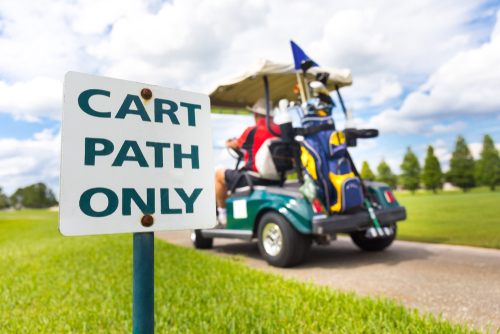
Who Can You Sue After a Golf Cart Crash in The Villages?
An injured person generally has at least two potential defendants: the golf cart owner and, if different, the driver. When these are separate individuals, each may carry distinct insurance policies that could apply to your claim. Identifying every responsible party early is essential to maximizing recovery.
| Potential Defendant | Legal Basis | Key Consideration |
|—|—|—|
| Golf Cart Driver | Direct negligence (duty, breach, causation, damages) | Must prove the driver failed to exercise reasonable care |
| Golf Cart Owner | Dangerous instrumentality or negligent entrustment | Owner may be liable even without personal fault |
| Government Entity (e.g., CDD) | Negligent road design or maintenance | Subject to sovereign immunity damage caps |
| Motor Vehicle Driver | Negligence in a collision with a golf cart | Separate auto insurance policies may apply |
Understanding how fault is shared is especially important in cases involving multiple parties. For a deeper look at golf cart-vehicle accidents, knowing how Florida law allocates responsibility can make a significant difference.
💡 Pro Tip: Preserve all evidence immediately after a golf cart accident. Photograph the scene, collect witness contact information, and request a copy of any accident or incident report. This documentation may become critical when proving fault.
Golf Cart vs. Low-Speed Vehicle: Why the Distinction Matters
Many vehicles in The Villages that residents call "golf carts" may actually qualify as "low-speed vehicles" under Florida law, and this classification carries real legal consequences. Under Florida Statutes § 320.01, a golf cart is designed for golf course use and cannot exceed 20 mph. A four-wheeled vehicle capable of speeds above 20 mph but not exceeding 25 mph is a low-speed vehicle and must be registered and insured.
This distinction matters because golf carts are exempt from vehicle registration requirements under Florida law. Many golf carts in The Villages may lack the insurance coverage typically associated with registered vehicles. If the vehicle involved is actually a low-speed vehicle, different registration, insurance, and liability rules may apply, potentially expanding your sources of recovery.
💡 Pro Tip: After an accident, take note of the make, model, and any speed markings on the golf cart involved. This information helps your attorney determine whether the vehicle is legally a golf cart or a low-speed vehicle, which can directly affect available insurance coverage.
How a Golf Cart Accident Lawyer in The Villages Identifies All Liable Parties
A thorough golf cart injury claim requires more than identifying the driver. An experienced golf cart accident lawyer will investigate the full chain of ownership, authorization, and insurance to build the strongest case. This includes confirming whether the driver had permission to operate the cart, whether the owner carried adequate coverage, and whether any government entity bears responsibility for hazardous road conditions.
Insurance Gaps That May Affect Your Recovery
Standard auto insurance policies may not cover golf cart operations, creating dangerous coverage gaps for both owners and accident victims. Golf cart owners typically need to review auto insurance, homeowners insurance, and umbrella policies to confirm adequate coverage. As an injured victim, understanding the at-fault party’s insurance situation helps identify every available source of compensation.
As discussed in The Florida Bar Journal, golf cart owners face significant financial exposure without proper coverage. When insurance is insufficient, your attorney may need to pursue the owner’s personal assets or identify additional liable parties.
Government Liability and Sovereign Immunity
Community Development Districts and other government entities managing roads in The Villages may bear liability for accidents caused by poor maintenance or dangerous designs. Florida Statutes § 768.28 waives sovereign immunity for tort claims against state agencies and subdivisions, including special districts operating within The Villages.
However, statutory caps limit government payouts to $200,000 per person and $300,000 per incident, which can significantly restrict compensation in serious injury cases. Government claims also require specific pre-suit notice procedures and shorter deadlines, making prompt legal action essential.
💡 Pro Tip: If you suspect a government entity contributed to your golf cart accident through poor road maintenance or inadequate signage, act quickly. Government claims may involve stricter notice deadlines than standard personal injury actions.
Florida’s Statute of Limitations for Golf Cart Injury Claims
Under Florida Statutes § 95.11, an action founded on negligence must generally be commenced within two years. This deadline applies to most golf cart accident personal injury claims in Sumter County and throughout Florida. If a claim is based on breach of a written contract, Florida’s statute of limitations allows up to five years, though the underlying negligence claim remains subject to the two-year deadline.
Courts interpret exceptions to these deadlines narrowly. While limited circumstances such as tolling provisions may apply, injured victims should not assume any extension is automatic. Missing your filing deadline can permanently bar your right to compensation.
- Negligence-based personal injury claims: 2 years from the date of the accident
- Breach of a written contract: 5 years
- Claims against government entities: Subject to additional notice requirements and potentially shorter deadlines under § 768.28
💡 Pro Tip: Do not wait until close to the deadline to begin your claim. Critical evidence can disappear, witnesses’ memories fade, and insurance companies may become less cooperative over time.
Steps to Protect Your Rights After a Golf Cart Collision
Taking the right steps immediately after a golf cart accident can make the difference between a strong claim and a missed opportunity. Even minor injuries may worsen over time, and early documentation protects your ability to pursue full compensation.
- Seek medical attention immediately and follow all treatment recommendations
- Report the accident to local law enforcement
- Photograph the scene, vehicle damage, and any visible injuries
- Gather contact information from witnesses
- Notify your insurance company, but avoid giving recorded statements without legal guidance
- Keep all medical records, bills, and accident-related correspondence organized
Frequently Asked Questions
1. Can I sue a golf cart owner even if they were not driving at the time of the accident?
In many cases, yes. Under Florida’s dangerous instrumentality doctrine, a golf cart owner who authorized another person to drive can be held vicariously liable for injuries caused by the driver’s negligence, even without personal fault.
2. What is the statute of limitations for a golf cart accident claim in Florida?
For most negligence-based golf cart injury claims, the statute of limitations is two years from the accident date under Florida Statutes § 95.11. Missing the deadline generally bars recovery.
3. Does it matter whether the vehicle is classified as a golf cart or a low-speed vehicle?
Yes. Florida law defines a golf cart as a vehicle that cannot exceed 20 mph, while a low-speed vehicle can travel between 20 and 25 mph. Low-speed vehicles must be registered and insured, which may affect available coverage and legal standards.
4. Are there caps on damages if a government entity is responsible?
Under Florida Statutes § 768.28(5), damages against government entities are capped at $200,000 per person and $300,000 per incident, regardless of injury severity.
5. What types of compensation can I pursue after a Villages FL golf cart accident?
You may be entitled to compensation for medical expenses, lost wages, pain and suffering, and other documented losses. In cases involving particularly reckless conduct, punitive damages may also be available.
Protecting Your Future After a Golf Cart Accident
Golf cart accidents in The Villages can produce life-altering injuries and complex legal questions about fault, insurance, and government immunity. Florida law gives injured victims powerful tools, including the dangerous instrumentality doctrine and multiple theories of negligence, but using them effectively requires prompt action. Understanding who may be liable and what deadlines apply gives you the strongest foundation for pursuing the compensation you deserve.
Glover Law Firm is committed to helping golf cart accident victims throughout The Villages and Sumter County. Call 352-205-4495 or reach out online to schedule a consultation and take the first step toward protecting your rights.