
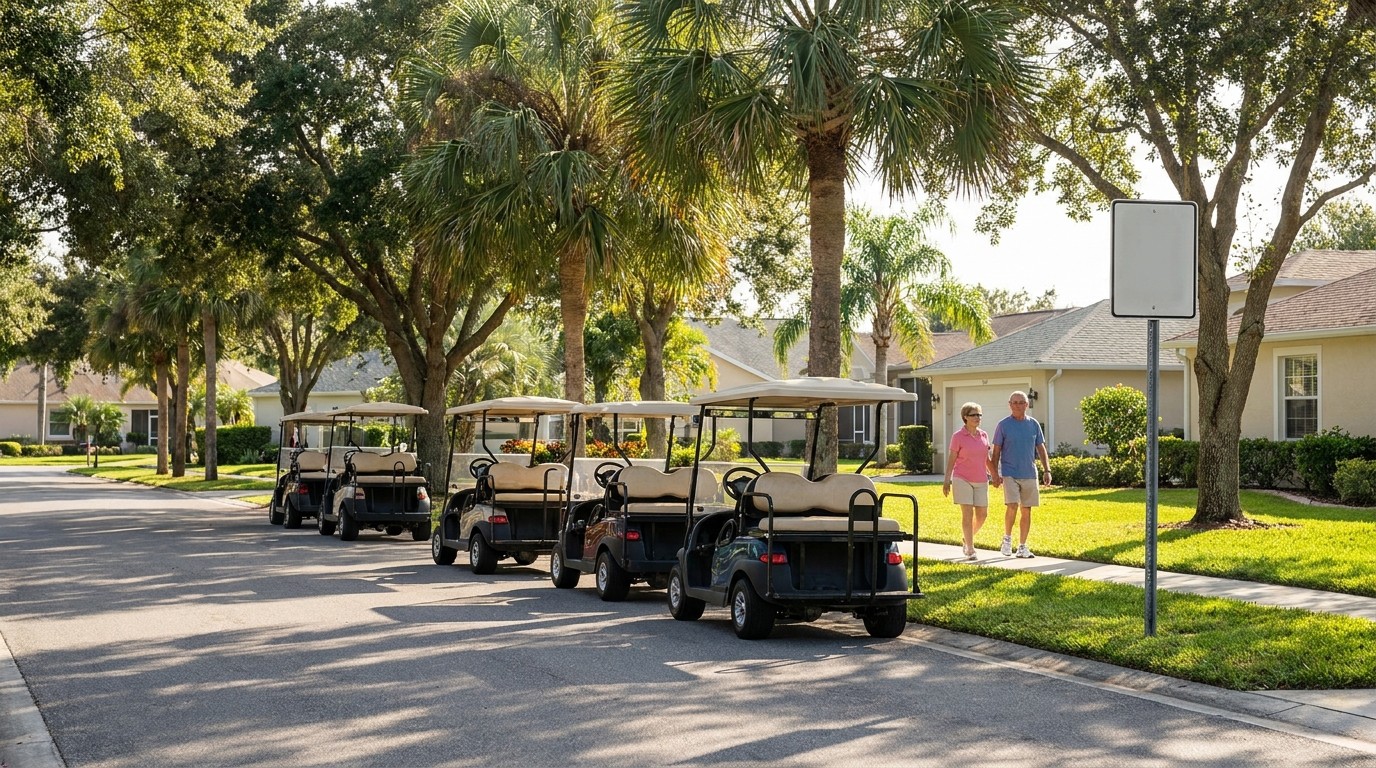
If you ride a golf cart around The Villages, you may not realize your vehicle could legally be classified as something else entirely. Under Florida law, the difference between a golf cart and a low-speed vehicle (LSV) comes down to one critical factor: speed. A golf cart modified to exceed 20 mph no longer qualifies as a "golf cart" under FL § 320.01(22) and instead falls under LSV regulations, triggering completely different legal obligations. This distinction matters if you’ve been injured in an accident involving a vehicle whose classification was unclear, as it directly affects insurance coverage, liability, and your ability to pursue a claim.
If you or a loved one suffered injuries in a golf cart or LSV accident in The Villages, Glover Law Firm can help you understand your legal options. Call 352-205-4495 or reach out online to discuss your situation today.
What Makes a Golf Cart Different from an LSV Under Florida Law
The legal distinction between a golf cart and an LSV hinges on the vehicle’s top speed capability. Under FL § 320.01(22), a "golf cart" is a motor vehicle designed and manufactured for operation on a golf course for sporting or recreational purposes that cannot exceed 20 miles per hour. Once a vehicle can travel faster than 20 mph, it no longer meets that definition.
An LSV, by contrast, is any four-wheeled vehicle whose top speed is greater than 20 mph but not greater than 25 mph. FL § 320.01(41) defines this category and specifies that LSVs must comply with federal safety standards under 49 C.F.R. § 571.500 and FL § 316.2122. This 20-to-25 mph speed range triggers LSV classification, along with registration, titling, insurance, and equipment mandates. A vehicle modified to exceed 25 mph may be subject to standard motor vehicle requirements. Many Villages residents modify their carts without realizing they’ve crossed this legal threshold.
💡 Pro Tip: If your golf cart has been modified with a new motor, speed controller, or performance upgrades, have the top speed tested. Even a small increase past 20 mph can reclassify your vehicle as an LSV.
Golf Cart Insurance Requirements in Florida and Why Classification Matters
Whether your vehicle is a golf cart or an LSV determines the type of insurance you need. Golf carts operated under the retirement community exemption in FL § 316.2125(1) are not subject to the same registration and insurance mandates as LSVs. However, LSVs must be registered and insured in accordance with FL § 320.02 and titled pursuant to Florida Statutes Chapter 319. Specifically, LSVs must carry personal injury protection (PIP) and property damage liability (PDL) insurance.
For accident victims, the golf cart insurance requirements in Florida can make or break a claim. If the vehicle that caused your injuries was actually an LSV operating without proper insurance, you may face challenges collecting compensation. If the at-fault driver should have carried LSV-level insurance but failed to do so, that gap could support additional negligence claims. Understanding Florida’s low-speed vehicle laws is essential for pursuing an accident claim in The Villages.
💡 Pro Tip: After any golf cart accident, document the make, model, and visible modifications on the vehicle involved. This helps your attorney determine proper classification and insurance.
LSV Registration and Equipment Requirements in The Villages
Mandatory Safety Equipment for LSVs
Florida law requires LSVs to carry specific safety equipment that standard golf carts do not need. Under FL § 316.2122(1)(b), every LSV must be equipped with:
- Headlamps and taillamps
- Stop lamps and turn signal lamps
- Reflex reflectors
- Parking brakes
- Rearview mirrors
- Windshields
- Seat belts
- Vehicle identification numbers (VINs)
A modified golf cart that exceeds 20 mph must carry all of this equipment to legally operate as an LSV. If a vehicle lacks any of these safety features and is involved in a collision, that missing equipment could constitute evidence of negligence in a personal injury claim.
Registration, Titling, and Licensing
Unlike golf carts, LSVs must be formally registered, insured, and titled. FL § 316.2122(1)(c) and (d) require LSV operators to register and insure their vehicles under FL § 320.02, obtain a title under Chapter 319, and possess a valid driver license. Golf carts operated within The Villages under the retirement community provision do not carry these same requirements.
| Requirement | Golf Cart | LSV (Over 20 mph) |
|---|---|---|
| Registration | Not required | Required under FL § 320.02 |
| Title | Not required | Required under Chapter 319 |
| Insurance | Not mandated by state | Required under FL § 320.02 (PIP and PDL) |
| Driver License | Operators under 18 must have a learner’s or driver license; operators 18+ must have valid government-issued photo ID (FL § 316.212) | Required (FL § 316.2122(1)(d)) |
| Safety Equipment | Basic (lights, reflectors) | Full package (seat belts, windshield, VIN, etc.) |
| Max Speed | 20 mph or less | Greater than 20 mph, up to 25 mph |
💡 Pro Tip: As of October 1, 2023, Florida law requires golf cart operators under 18 to possess a valid learner’s or driver license, while operators 18 and older must carry valid government-issued photographic identification.
Where Golf Carts and LSVs Can Legally Operate in The Villages
Road Restrictions for LSVs
LSVs may only be operated on streets where the posted speed limit is 35 mph or less. FL § 316.2122(1)(a) permits LSVs to cross intersections on roads with higher speed limits, but they cannot travel along those higher-speed roads. This is a key restriction for LSV operators navigating The Villages’ road network.
Golf carts face their own road restrictions. Under FL § 316.212, golf carts may generally operate only on public roads designated for golf cart use and may cross certain highways at designated points. In designated communities like The Villages, FL § 316.2125 authorizes broader golf cart operation within any self-contained retirement community, without imposing a specific posted speed limit threshold, unless a county, municipality, or the Department of Transportation prohibits such operation in the interest of safety.
Local Authority Over Golf Cart and LSV Rules
Counties and municipalities in The Villages area retain authority to impose additional restrictions. Under FL § 316.2122(3), a county or municipality may prohibit LSV operation on any road under its jurisdiction if the governing body determines such prohibition is necessary for safety. FL § 316.212(8)(a) authorizes local governments to enact ordinances making golf cart operation rules more restrictive than state law. FL § 316.2125(2) allows counties, municipalities, and the Department of Transportation to prohibit golf cart operation on specific streets for safety reasons, and FL § 316.2125(3) permits local governments to adopt more restrictive golf cart ordinances.
💡 Pro Tip: The Villages spans portions of Sumter, Lake, and Marion counties. Rules may vary by county, so check local ordinances.
Why LSV Classification Affects Your Golf Cart Accident Claim
If you were hurt in a collision involving a modified golf cart in The Villages, the vehicle’s legal classification could significantly impact your case. A vehicle operating as an unregistered, uninsured LSV may expose its owner to greater liability. The absence of required safety equipment like seat belts or windshields could also support a negligence claim if those missing features contributed to your injuries.
Florida’s retirement community exemption under FL § 316.2125(1) only protects vehicles that legally qualify as golf carts. A modified cart exceeding 20 mph no longer benefits from this exemption and must comply with full LSV requirements. When an operator fails to meet these obligations and causes an accident, that failure can strengthen a victim’s case. A golf cart accident attorney in The Villages can investigate the vehicle’s classification and determine what insurance coverage should have been in place.
💡 Pro Tip: Preserve all evidence from the accident scene, including photos of the vehicle, its speedometer or speed controller, and any modifications.
Golf Cart Modifications That Trigger LSV Classification
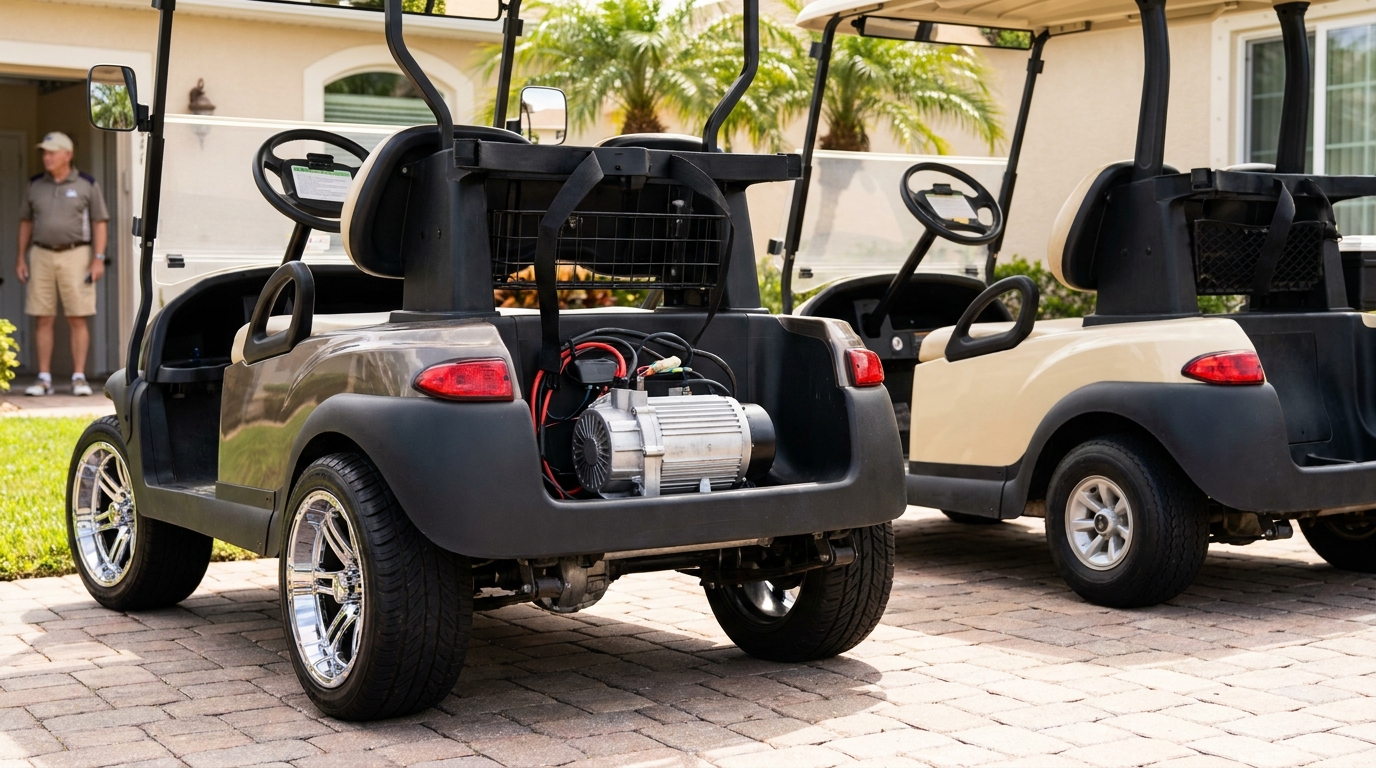
Many Villages residents upgrade their golf carts without understanding the legal consequences. Common modifications include upgraded motors, higher-output batteries, aftermarket speed controllers, and performance tires. Any modification enabling the vehicle to exceed 20 mph reclassifies it as an LSV under FL § 320.01(41), requiring the owner to meet all LSV registration, insurance, and equipment standards. If modifications push the vehicle beyond 25 mph, it may no longer qualify as an LSV and could be subject to standard motor vehicle regulations.
The golf cart speed limit of 20 mph is a hard legal line. Once crossed, the vehicle owner must register and title the vehicle, obtain insurance, install all mandatory safety equipment, and ensure every operator carries a valid driver license. Failure to comply may constitute a violation of Florida law and could serve as evidence of negligence in a personal injury case.
Frequently Asked Questions
1. How do I know if my golf cart is legally an LSV in Florida?
The dividing line is 20 mph. If your vehicle cannot exceed 20 mph, it’s a golf cart under FL § 320.01(22). If it can travel faster than 20 mph but not faster than 25 mph, it’s an LSV under FL § 320.01(41) subject to registration, insurance, and equipment requirements.
2. Do I need insurance for a golf cart in The Villages?
Florida does not impose state-level insurance mandates on golf carts. However, LSVs must be insured under FL § 320.02, carrying at minimum PIP and PDL coverage. If your cart has been modified to exceed 20 mph, you’re generally required to carry LSV insurance.
3. Can a modified golf cart still use The Villages’ cart paths?
The retirement community exemption under FL § 316.2125(1) applies only to vehicles qualifying as golf carts. A modified cart exceeding 20 mph must follow LSV operating rules, including the restriction to roads with posted speed limits of 35 mph or less.
4. What should I do after a golf cart accident in The Villages?
Seek medical attention immediately, document the scene with photos and witness information, and note any visible modifications on the vehicles involved. This evidence helps establish whether the vehicle was properly classified and insured.
5. Can local rules in The Villages add restrictions beyond state law?
Yes. FL § 316.212(8)(a) authorizes local governments to enact ordinances that are more restrictive than state law regarding golf cart operation. FL § 316.2125(2) allows counties, municipalities, and the Department of Transportation to prohibit golf cart operation on specific streets for safety reasons, and FL § 316.2125(3) permits local governments to adopt more restrictive golf cart ordinances. Authority to restrict LSV operation is found in FL § 316.2122(3).
Protecting Your Rights After a Golf Cart or LSV Accident
The line between a golf cart and an LSV in The Villages is thin but legally significant. A vehicle’s classification under Florida law determines the insurance coverage available, the safety standards that should have been met, and the liability exposure of the operator. If you were injured in an accident involving a golf cart or LSV, understanding these distinctions is critical to protecting your right to fair compensation.
The team at Glover Law Firm is ready to help you evaluate your golf cart accident claim in Florida. Call 352-205-4495 or contact us today to schedule a consultation.