
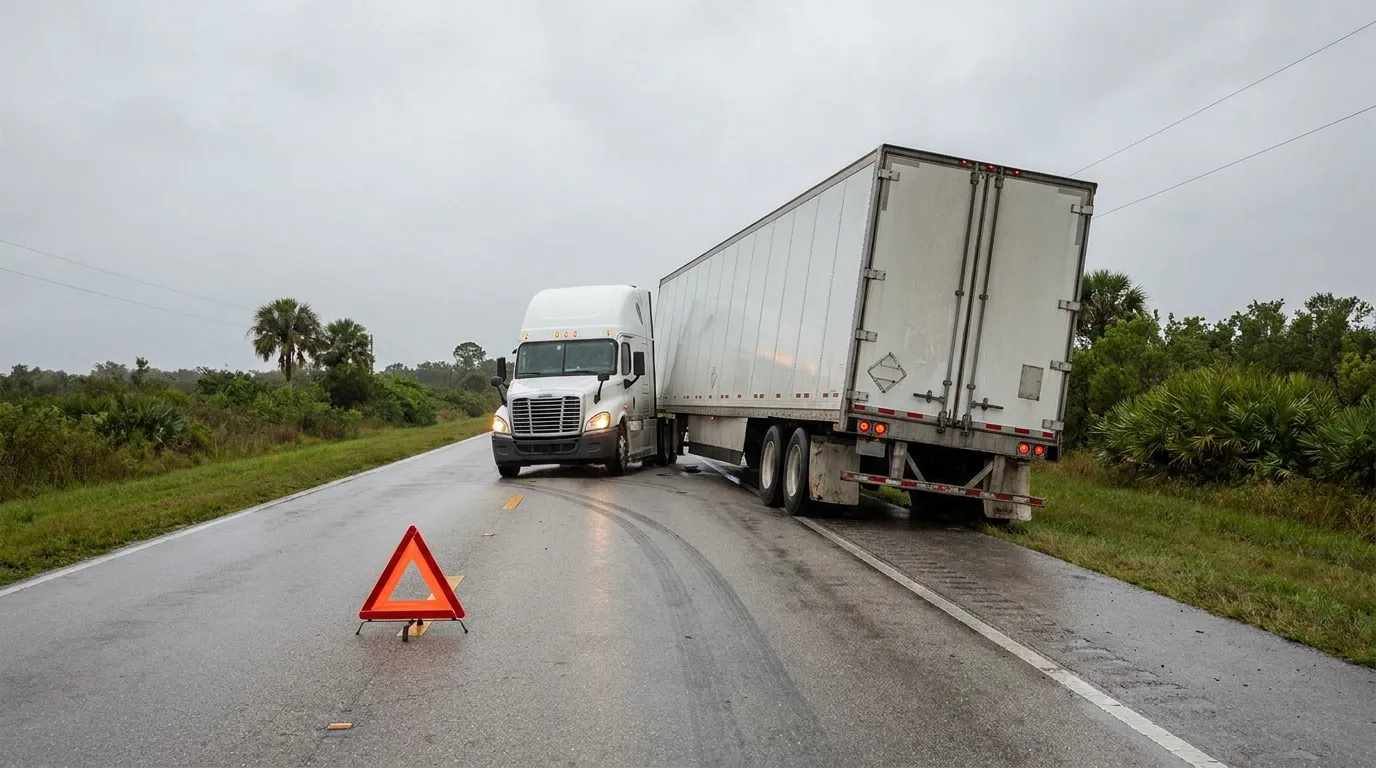
How Trailer Swing Crashes Happen and Who Pays for Them in Florida
Key Takeaways: A semi-truck jackknifes when its wheels lock or lose traction and the trailer keeps moving, swinging out until it forms a sharp angle with the cab. Common causes include speeding or driving too fast for conditions, hard braking on curves, wet pavement, poorly kept brakes, faulty anti-lock systems and overloaded or poorly balanced cargo. Under Florida law, the truck driver, the trucking company, the cargo loader, a maintenance provider or a parts maker may share the blame, and in negligence cases each defendant generally pays only its own percentage of fault under Fla. Stat. § 768.81(3). Under Florida’s modified comparative negligence rule, injured people may still be able to recover if they are 50 percent or less at fault, but their damages are reduced by their own share. Most negligence and wrongful death claims must be filed within two years under Fla. Stat. § 95.11(5), though negligence claims that arose before March 24, 2023 generally have a four-year deadline. Keeping evidence such as inspection reports, electronic logging data and skid-mark photos, and acting quickly, can strengthen a claim.
A jackknife truck accident usually happens when a semi-truck’s wheels lock or lose traction and the trailer keeps moving forward, swinging out until it forms a sharp angle with the cab. Speeding, hard braking, sharp curves, wet pavement, bad brakes and poorly balanced cargo are common causes. Under Florida law, more than one party can share the blame, including the truck driver, the trucking company, the cargo loader, a maintenance provider, or a parts maker. Florida juries generally split fault by percentage, so knowing who did what can change how much an injured person may recover.
If you or someone you love was hurt in a trailer swing crash in Marion County, Glover Law Firm can review what happened and explain your options. Call 352-484-0775 or contact us now to talk about your case.
Why Trucks Jackknife on Florida Roads
Most jackknife crashes start with a loss of traction or braking control that lets the trailer push past the tractor. A fully loaded semi can weigh 20 times as much as a passenger car or more. When the tractor’s wheels stop gripping the road, the trailer’s momentum can swing it sideways across several lanes. Interstate 75 and the highways around Ocala carry heavy freight traffic, so a single trailer swing crash there can involve several vehicles.
Speed and Driving Too Fast for Conditions
Speeding and driving too fast for conditions are leading causes of jackknifing because hard braking at high speed can lock the wheels. Under Fla. Stat. § 316.183(1), no one may drive faster than is reasonable and prudent under the conditions, considering actual and potential hazards. Fla. Stat. § 316.185 requires drivers to slow down when approaching curves, nearing the top of a hill, traveling narrow or winding roads, and when weather or road conditions create special hazards. Those are the same situations in which trailers often swing out.
Driving under the posted limit does not automatically protect a trucker from liability. A sudden Central Florida downpour may require a truck driver to slow well below the posted speed. In a civil case, a traffic violation is generally treated as evidence of negligence, not automatic proof of it. You can read these traffic rules in Florida’s Chapter 316 statutes.
Brakes, Cargo, and Equipment Problems
Mechanical and loading problems can turn an ordinary stop into a jackknife. Uneven brake adjustment, worn brake parts and failed anti-lock braking systems can make one axle grab before another. Overloaded, uneven or shifting cargo can also throw off the trailer’s balance. To learn how loading failures lead to crashes, see our guide on cargo securement violations.
Common contributing factors include:
- Speeding, or braking hard on curves and exit ramps
- Driver fatigue, distraction, or hours-of-service violations
- Brake imbalance or poorly kept anti-lock systems
- Empty or lightly loaded trailers, which have less traction
- Overweight, unbalanced or shifting cargo
- Rain, standing water, or slick roads
💡 Pro Tip: If you can do so safely, photograph the trailer’s position, any skid marks, and the road surface before anyone moves the vehicles. Skid patterns can help show how fast the truck was going and when the driver started braking.
Proving Fault in a Jackknife Truck Accident
Like other injury claims, jackknife cases generally depend on the four parts of negligence: duty, breach, causation and damages. Commercial drivers have a duty to drive safely and follow traffic and safety rules. A breach might be speeding, driving while tired, or skipping brake inspections. You then generally have to show that the breach caused the crash and your injuries, and document your losses.
Regulatory Records as Evidence
State and federal safety records can help show a breach of duty. Florida Highway Patrol’s Commercial Vehicle Enforcement unit enforces safety rules on commercial trucks, including inspections of brakes, cargo securement and driver qualifications, using Federal Motor Carrier Safety Administration standards that Florida has largely adopted. Depending on the rules of evidence, inspection reports and past violations may help show whether a carrier broke safety rules or knew about a problem before the crash. These enforcement actions are separate from your civil lawsuit.
Licensing records can also matter. Florida requires a commercial driver’s license in the correct class (A, B or C) to drive a commercial truck, and certain freight requires endorsements, such as "H" for hazardous materials and "N" for tank vehicles. If the driver lacked the right license or endorsement, that fact could affect who is liable. A licensing violation alone generally does not prove fault, though. It usually has to be tied to how the crash happened.
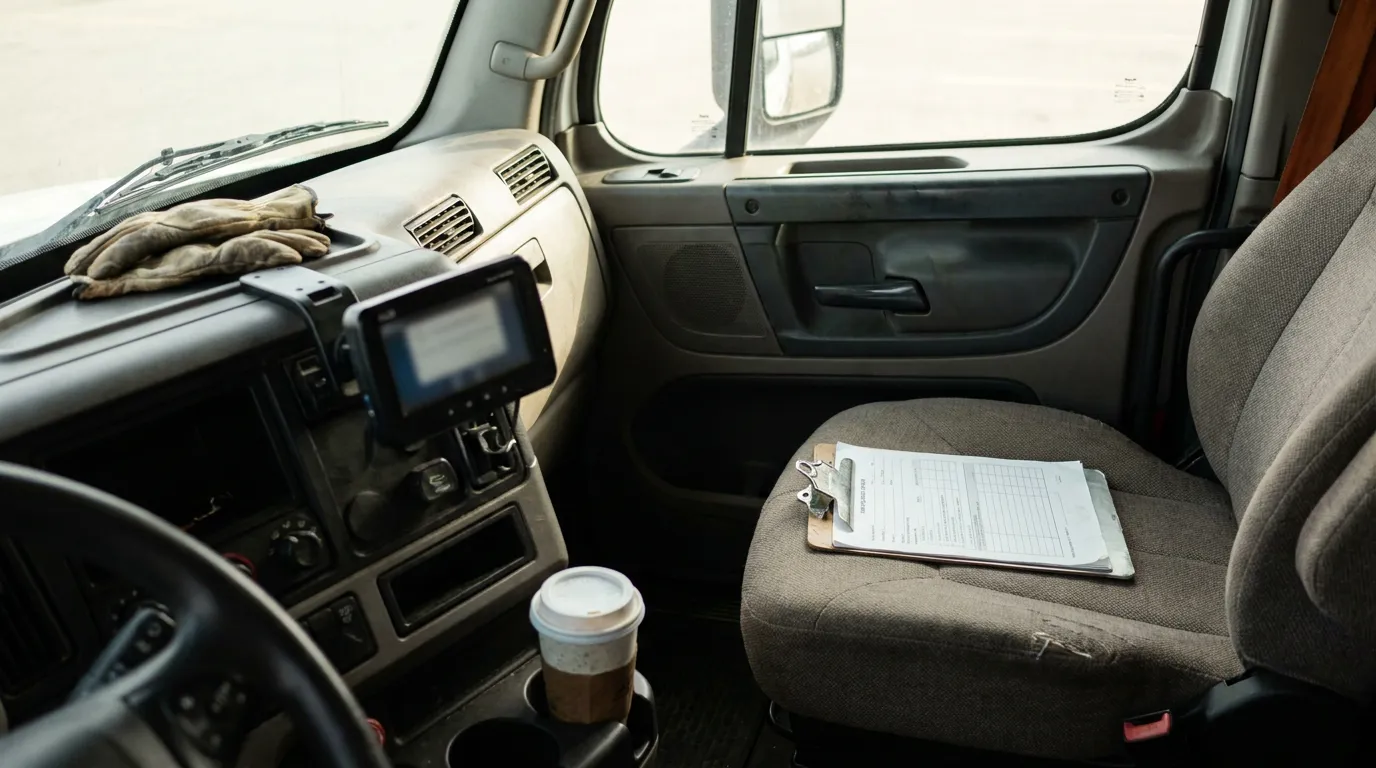
💡 Pro Tip: Trucks often carry electronic logging devices and engine control modules that record speed, braking and driving hours. A prompt letter asking the company to preserve this data may help keep it from being erased or lost.
Identifying Liable Parties in a Truck Crash
Several parties may share the blame for a Florida semi-truck crash, and courts generally weigh each one’s role separately. The table below lists common defendants and why they might be held responsible.
| Potential Party | Possible Basis for Liability |
|---|---|
| Truck driver | Speeding, fatigue, distraction, unsafe braking |
| Trucking company | Employer liability, negligent hiring, hours-of-service pressure |
| Cargo loader | Overloading, imbalance, poor securement |
| Maintenance provider | Neglected brake or equipment repairs |
| Manufacturer | Defective brakes or anti-lock braking systems |
When a defective product contributed to the crash, Florida law still requires a comparison of fault. Under Fla. Stat. § 768.81(3)(b), in a products liability claim the jury must consider the fault of everyone who contributed to the crash when dividing damages. A brake maker and a careless driver could each carry part of the blame.
How Insurance and Self-Insurance Affect Your Claim
Florida and federal law require commercial carriers to show they can pay for the harm they cause. Interstate carriers must meet federal minimum insurance rules, either through a standard insurance policy or an approved self-insurance program. Large fleets that self-insure may pay claims themselves instead of through an outside insurer. That can change who you negotiate with and how the claim moves forward.
How Florida Divides Jackknife Crash Fault
Florida has largely abolished joint and several liability in negligence cases. Under Fla. Stat. § 768.81(3), the court generally enters judgment against each party based on that party’s own percentage of fault. If a trucking company is 60 percent at fault and a loader is 40 percent at fault, each generally pays only its own share. There are exceptions, though. For example, an employer held responsible for its driver’s conduct may have to pay the driver’s share. That is one reason it matters to identify every responsible party early.
Defendants sometimes blame people who are not part of the lawsuit, such as a phantom vehicle that supposedly cut the truck off. Under Fla. Stat. § 768.81(3)(a)1.-2., a defendant must raise the nonparty’s fault as an affirmative defense and identify the nonparty, or describe them as specifically as possible. The defendant then has to prove that fault at trial by a preponderance of the evidence.
Your own share of fault can also affect your recovery. Florida uses modified comparative negligence. Under Fla. Stat. § 768.81(6), in negligence cases a person found more than 50 percent at fault for their own harm cannot recover any damages. This rule does not apply to medical negligence claims under chapter 766, and it applies to negligence claims filed after March 24, 2023. You can read the rules for dividing fault in Florida’s comparative fault law.
Deadlines and Documenting Your Losses
Most jackknife injury claims must be filed within two years. Fla. Stat. § 95.11(5)(a) sets a two-year deadline for negligence claims that arose on or after March 24, 2023. Older negligence claims generally fall under the previous four-year deadline. Under Fla. Stat. § 95.11(5)(e), wrongful death claims have a two-year limit that usually runs from the date of death. Certain exceptions may pause or extend a deadline, but courts read them narrowly. Claims against government entities have separate notice rules and deadlines.
Strong records can support claims for both financial and non-financial losses. Keep your medical records, bills, proof of lost wages and notes on how your injuries affect daily life. Serious injuries, such as spinal cord damage or traumatic brain injury, may require testimony about future care costs. Speaking with a jackknife truck accident lawyer early can help preserve evidence before it disappears.
💡 Pro Tip: Be careful about giving a recorded statement to the trucking company’s insurer before you understand your rights. The insurer may later use your words to argue that you share the blame.
Frequently Asked Questions
-
What is the most common cause of a jackknife truck accident?
Speeding and driving too fast for conditions are among the leading causes, because hard braking at high speed can lock the wheels. Brake defects and unbalanced cargo also often play a part.
-
Can the trucking company be liable if the driver caused the crash?
In many cases, yes. Under respondeat superior, employers can be held responsible for an employee driver’s negligence on the job. A company may also be directly liable for its own careless hiring, training or maintenance. Liability for independent contractors depends on the facts.
-
What if the insurer says another car caused the jackknife?
To place a nonparty on the verdict form, the defendant must raise that person’s fault, identify or describe them, and prove the fault by a preponderance of the evidence under Fla. Stat. § 768.81(3)(a).
-
Can I recover if I was partly at fault?
Generally, you may still be able to recover if you are found 50 percent or less at fault. Your damages would be reduced by your share of fault under Fla. Stat. § 768.81(6).
-
How long do I have to file a claim?
Negligence and wrongful death claims generally must be filed within two years under Fla. Stat. § 95.11(5)(a) and (e). Negligence claims that arose before March 24, 2023 generally have four years. Exceptions are narrow and depend on the facts.
Protecting Your Rights After a Trailer Swing Crash
Jackknife crashes often come from preventable failures, including speeding, poor maintenance and bad loading, and Florida law may let injured people hold each responsible party to account. Because fault is divided by percentage, deadlines are short, and key evidence can disappear quickly, acting promptly may make a real difference. The outcome of any case depends on its specific facts.
If a semi-truck crash has changed your life, Glover Law Firm is ready to listen and help you understand your next steps. Call 352-484-0775 or schedule your consultation today.
Disclaimer: This content is for informational purposes only and is not legal advice. Every case is unique, and results may vary. Consult an attorney about your specific circumstances.