
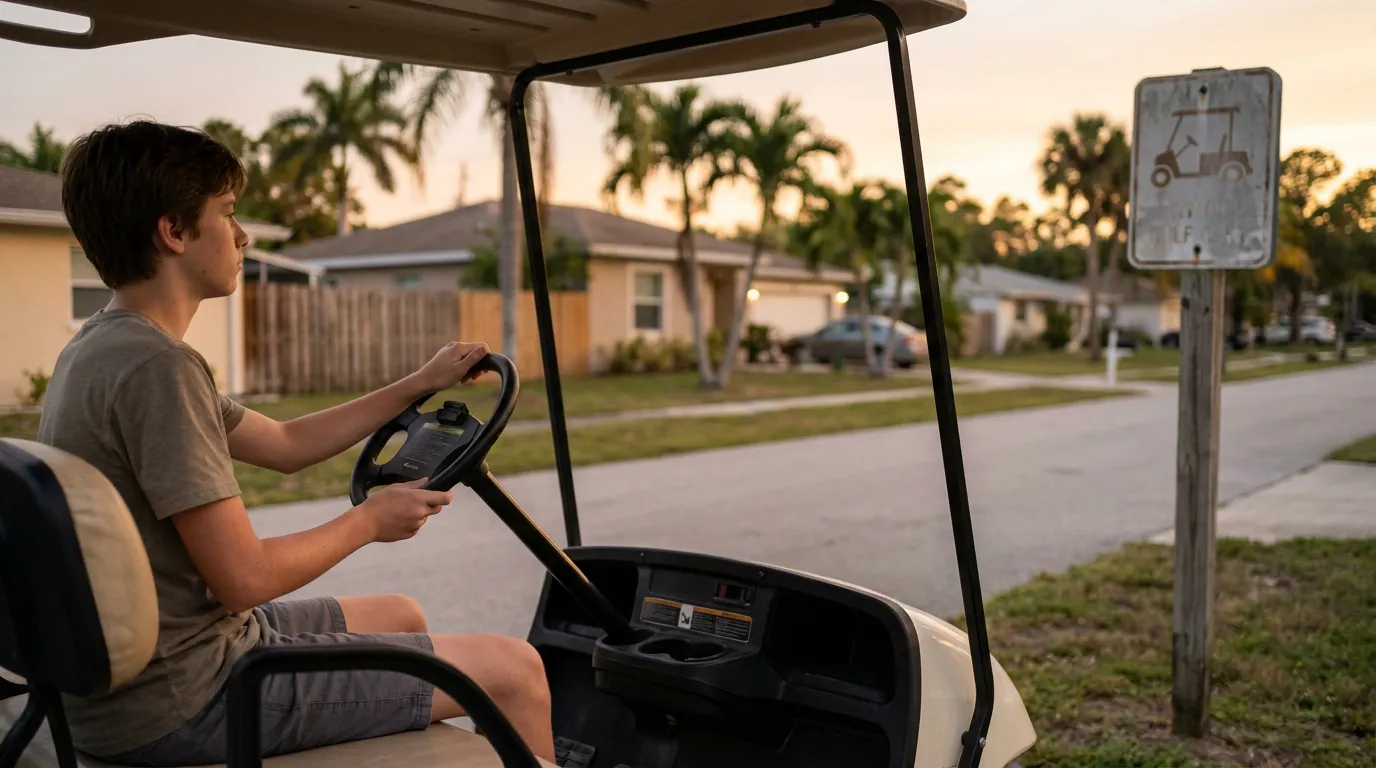
When a Teen Crashes a Golf Cart, Who Pays for Your Injuries?
Key Takeaways: Florida law defines a golf cart as a motor vehicle, so the teen driver may not be the only person responsible for a crash. Under Florida Statutes § 322.09(2), a parent or guardian who signed the teen’s license application may be jointly and severally liable for the teen’s negligent driving on a public road until the teen turns 18. Others may also share liability, including the cart’s owner, an adult who let an unlicensed or underage teen drive, other drivers, and anyone responsible for faulty safety equipment. If a teen breaks Florida’s rules on age, licensing, approved roads, or nighttime driving, the violation may be evidence of negligence. Florida’s comparative fault statute, § 768.81, splits responsibility among everyone at fault. It reduces your award by your share of fault, and since 2023 it generally bars recovery if you are more than 50% at fault. Getting medical care quickly, documenting the scene, and meeting filing deadlines can help protect your right to compensation.
If a teen driver causes a golf cart crash in Florida, the teen may not be the only person legally responsible. Florida law defines a golf cart as a motor vehicle. Because of that, the parent or guardian who signed the teen’s license application may share liability under Florida Statutes § 322.09(2). The cart’s owner and other drivers may also be responsible. This guide explains the laws that can shape a claim and steps that may help protect your right to compensation.
If you or someone you love was hurt by a teen golf cart driver, getting legal help early can help you protect evidence and avoid common insurance mistakes. The team at Glover Law Firm helps injured residents and visitors throughout The Villages, Sumter County, and Marion County. Call 352-205-4495 or contact us now to talk about your situation.
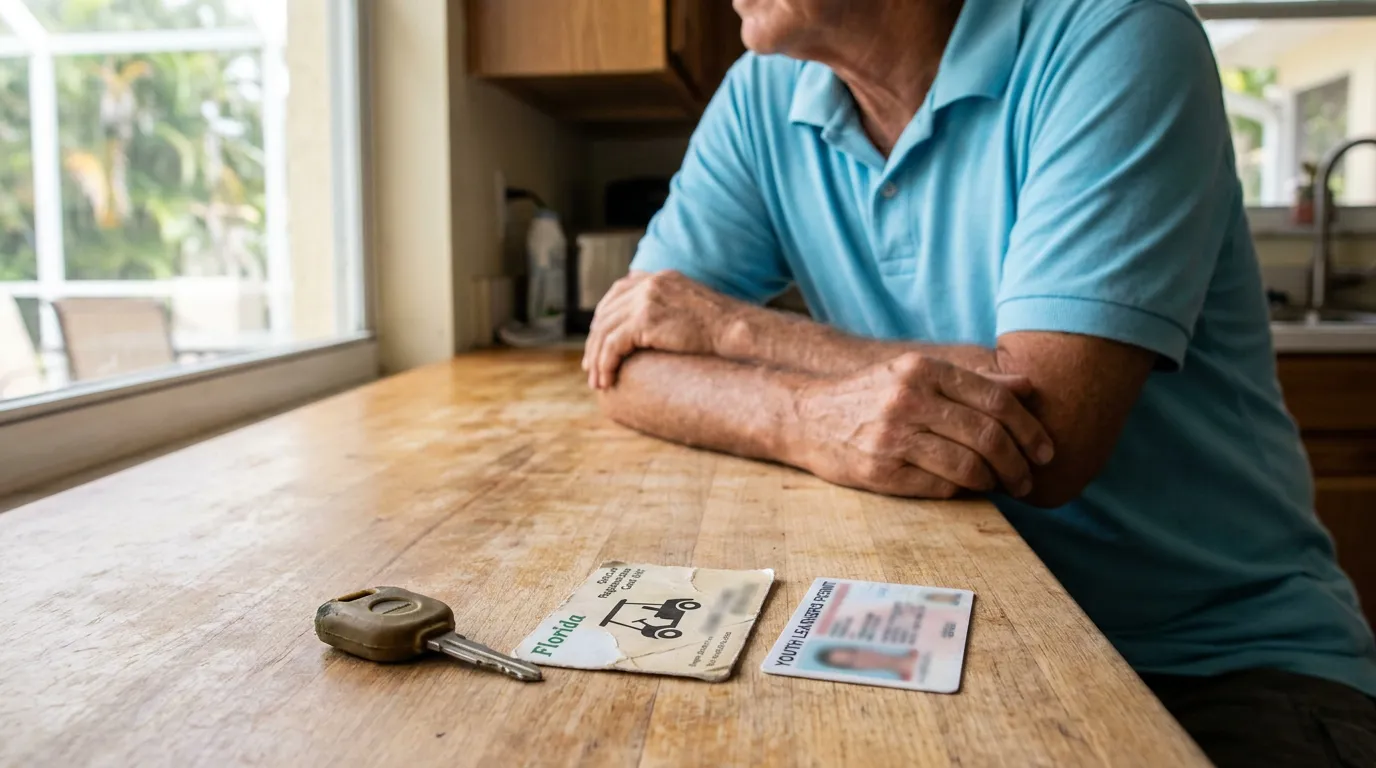
Is a Golf Cart Considered a Motor Vehicle in Florida?
Yes. Under Florida’s traffic code, a golf cart is a motor vehicle. Florida Statutes § 316.003(29) defines a golf cart as a motor vehicle designed and manufactured for use on a golf course for sporting or recreational purposes. The requirement that a golf cart not be able to go faster than 20 mph appears separately in Florida Statutes § 320.01(22). A faster vehicle, such as a low-speed vehicle, falls under different rules.
The motor vehicle label appears in more than one place in Florida’s code. For example, Florida Statutes § 316.2126(3)(a)1. defines a golf cart by referring to the motor vehicle definition in § 320.01(22). You can review the full text of Florida’s uniform traffic laws to see how these laws fit together.
This matters because it may open more paths to recovery, including parental liability under the statute and claims based on broken traffic and safety rules. Some rules apply only on public roads, so whether a rule applies depends on where and how the crash happened.
The Rules Teen Golf Cart Drivers Must Follow
Florida sets age, license, and equipment rules for golf cart drivers on public roads. If a teen breaks these rules, the violation may be evidence of negligence. A violation does not prove fault by itself, though. It must also have helped cause the crash.
Age and License Requirements
Florida Statutes § 316.212(7)(a) bars anyone under 18 from driving a golf cart on public roads unless they hold a valid learner’s license or driver license. Florida previously set a flat minimum age of 14, but that blanket ban was repealed effective October 1, 2023; § 316.212(3) now addresses golf cart crossings at streets dividing a single mobile home park. Under § 316.212(7)(b), drivers 18 and older must carry valid government-issued photo ID. A teen driving without the required license may be evidence of negligence, and it may also point toward the adult who let the teen drive.
Where Golf Carts May Legally Operate
Outside retirement communities, golf carts generally may run only on roads that local governments have approved for them. Florida Statutes § 316.212(1) limits golf carts to approved county roads, city streets, and water control district roads. A crash on a road not approved for golf carts may raise more liability questions.
Retirement communities such as The Villages follow a related rule. Florida Statutes § 316.2125 allows reasonable golf cart use within a self-contained retirement community if the cart is equipped and driven in line with § 316.212(5), (6), and (7), including the age and license rules. Under § 316.008(7)(a) and § 316.212(8), counties and cities may also allow golf carts on sidewalks, but they must cap speed at 15 mph and require the equipment listed in subsection (6).
Equipment Requirements After Dark
Under Florida Statutes § 316.212(5), golf carts on public roads may generally run only between sunrise and sunset. The exception is when the local government has allowed nighttime use and the cart has headlights, brake lights, turn signals, and a windshield. Subsection (6) also requires equipment such as efficient brakes, a reliable steering apparatus, safe tires, a rearview mirror, and red reflectorized warning devices on the front and rear. If missing lights or reflectors helped cause a crash, that violation may become part of the fault analysis.
| Requirement | Statute | Why It May Matter in Your Claim |
|---|---|---|
| License required for drivers under 18 | § 316.212(7)(a) | Possible evidence of negligence; may point to the adult who let the teen drive |
| Approved roads only | § 316.212(1) | Crash location may raise liability questions |
| Daylight operation unless nighttime equipment allowed | § 316.212(5) | Equipment failures may show fault |
| Brakes, mirror, and reflectors required | § 316.212(6) | Equipment failures may show fault |
| 15 mph limit on allowed sidewalks | § 316.008(7)(a) | Speeding may support negligence |
Who May Be Liable for a Teen Golf Cart Crash?
More than one party may share blame when a teen causes a golf cart crash. The facts decide who can be held accountable.
Parents or Guardians Who Signed the License Application
Parent liability for golf carts in Florida often starts with Florida Statutes § 322.09(2). Under this law, the negligence or willful misconduct of a minor under 18 driving a motor vehicle on a highway is charged to the person who signed the minor’s permit or license application. That person may be held jointly and severally liable with the minor. Because Florida treats a golf cart as a motor vehicle, this rule may apply to a teen driving a golf cart on a public road. It may not apply if no one signed a Florida application or if the crash happened off public roads. You can learn more about parents’ liability for teen drivers in our related guide.
Owners and Other Responsible Parties
Others may also share blame. Depending on the facts, these may include:
- The golf cart’s owner, possibly under Florida’s dangerous instrumentality doctrine, which Florida courts have applied to golf carts, although § 324.021(9)(b)3. may cap the liability of an owner who is a person, not a business, and lent the cart to someone with permission to use it
- An adult who let an unlicensed or underage teen drive
- Another driver who helped cause the crash
- A party responsible for missing or faulty safety equipment
How Florida Divides Fault Among Multiple Parties
Florida uses a comparative fault system that can affect how much each party pays. Under Florida Statutes § 768.81(3), the judge or jury must weigh the fault of everyone who helped cause the crash, whether or not they were named in the lawsuit. Each party generally pays only its own share of fault. But a party held liable for the teen’s actions, such as a signing parent or a cart owner, may still have to pay the teen’s share. Florida’s comparative fault statute sets out these rules.
The law also addresses your own share of fault. Under § 768.81(2), your own fault reduces your award by the same percentage. Since the 2023 changes, § 768.81(6) generally bars anyone more than 50% at fault from recovering damages in a negligence case, though medical malpractice claims are excluded. Insurers often try to shift blame onto victims, so careful records are important.
💡 Pro Tip: Don’t give a recorded statement to the teen driver’s insurer before you understand your rights. Casual comments can later be used to argue that you share fault.
Steps That May Strengthen Your Golf Cart Accident Claim
What you do after a crash can affect the evidence available later. Get medical care right away and keep every record. Photograph the scene, the cart, its lights, and any road signs. Get names from witnesses, and find out whether the teen had a license.
Filing deadlines also matter. For most negligence claims arising after March 24, 2023, Florida Statutes § 95.11 sets a two-year deadline, and missing it can end your right to recover. If a government agency may be involved, § 768.28 requires written notice to the agency and the Department of Financial Services before you file suit. Talking with a golf cart accident claim lawyer can help you find the deadlines that apply to your case.
Frequently Asked Questions
1. Is a golf cart considered a motor vehicle under Florida law?
Yes. Florida Statutes § 316.003(29) defines a golf cart as a motor vehicle. That means motor vehicle liability rules may apply.
2. Can parents be sued when their teen crashes a golf cart?
Possibly. Under Florida Statutes § 322.09(2), the person who signed a minor’s license application may be jointly and severally liable for the minor’s negligent driving on a highway. Whether the law applies depends on the facts.
3. How old must a teen be to drive a golf cart on Florida roads?
Florida Statutes § 316.212(7)(a) requires drivers under 18 to hold a valid learner’s license or driver license to drive a golf cart on public roads. Florida’s former flat minimum age of 14 was repealed effective October 1, 2023.
4. Can I still recover compensation if I was partly at fault?
Yes, as long as you were not more than 50% at fault. Under Florida Statutes § 768.81, your damages are reduced by your share of fault.
5. Do the same rules apply inside The Villages?
Generally, yes. Florida Statutes § 316.2125 allows golf carts in retirement communities, subject to the equipment, age, and license rules in § 316.212.
Protecting Your Recovery After a Teen Golf Cart Crash
In Florida, liability for a teen golf cart crash can extend beyond the young driver. Because Florida law treats golf carts as motor vehicles, parents who signed a license application, cart owners, and other careless parties may share responsibility. Every case depends on its own facts, so review your options early.
If a teen golf cart driver injured you, Glover Law Firm can review your claim and explain your options. Call 352-205-4495 or schedule your consultation today.
Disclaimer: This content is for informational purposes only and is not legal advice. Every case is unique, and results may vary. Consult an attorney about your specific situation.